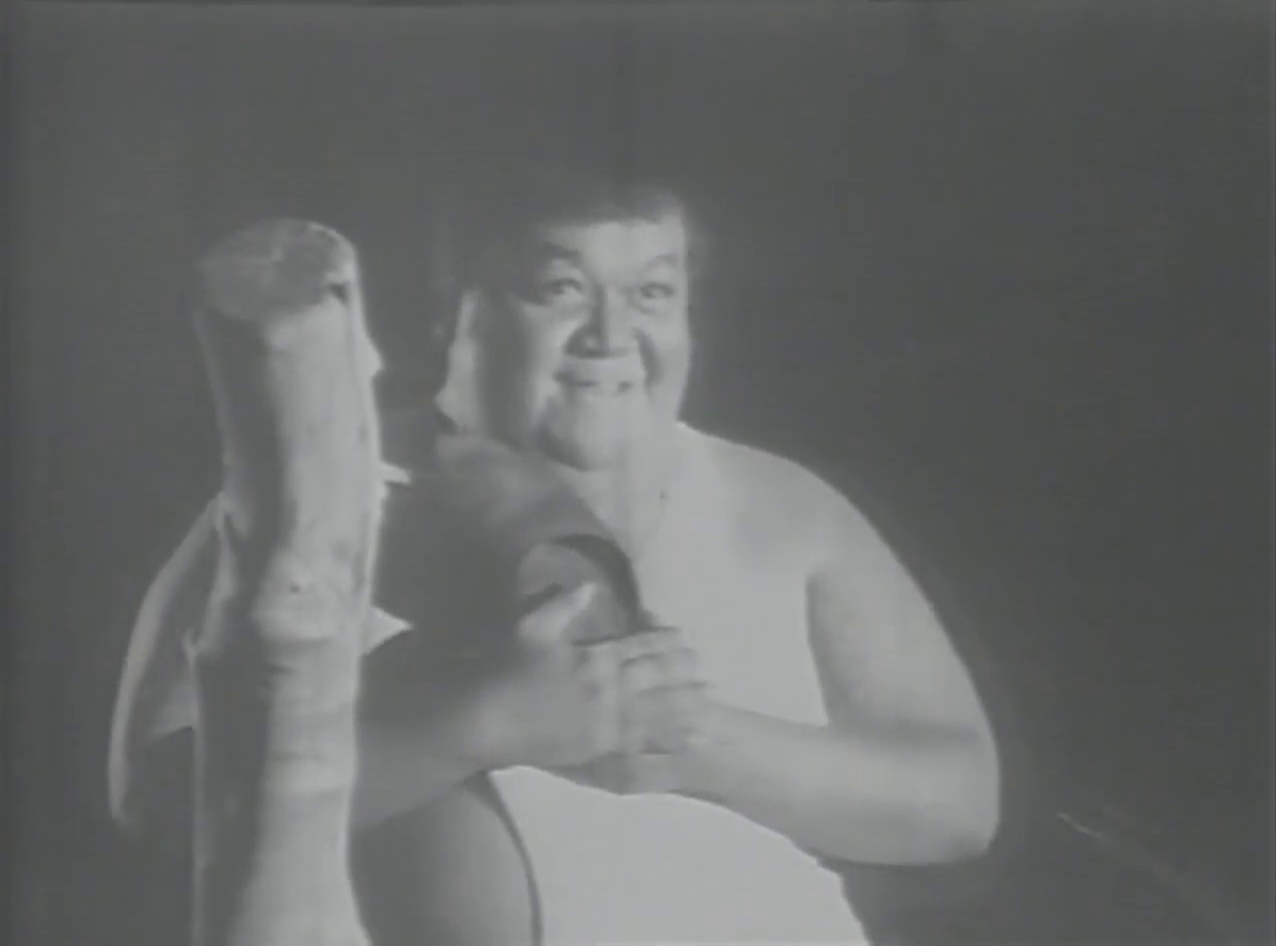
1976 - Sila...Sa Bawa't Bangketa/"They…On Every Sidewalk" (Liliw Productions)
[Release date 17th December, 1976; re-released in cinemas 9th April 1977]
Director Dante “Boy” Pangilinan Writer "Cora C. Ridon"/Cora Ridon Caballes Producer "Twinkle" [Caballes] Executive Producers Peter M. Caballes, Cora Ridon Caballes Cinematography Nestor Orense Music Kuya Mimo
Cast Rez Cortez, Ramon “Boy” Bagatsing, Ingrid Salas, Yoyoy Villame, Weng Weng, Joy Navarro, Michael Vallar, Marie Grace Santos, Linda Castro, Sarah Gumaboa, Vivian Velez, Danny Glenmore, Ruel Romano, Odette Khan, Rudy de la Pena, Tony Orbeta, Angel Confiado, Gil Arena, Leo Langalong, SOS Daredevils, Larry Esguerra, Amay Bisaya, Peter M. Caballes
ACTION/COMEDY
THE LOST MOVIE PROJECT: Piecing together the fragments of the Philippines' vanished cinema
Andrew Leavold on Sila...Sa Bawa't Bangketa [from The Search For Weng Weng book]; the fill interview with Dante 'Boy' Pangilinan's interview is HERE, and the Rez Cortez interview is HERE
"We are supposed to make Sila…Sa Bawa't Bangketa," Dante 'Boy' Pangilinan related. "I am the Assistant Director and Maria Saret is the director. But eventually, Direk [“Director”] Maria Saret is already pregnant and almost to deliver. So my producer, Ms Cora Caballes, 'Direk, we're supposed to shoot this coming week!' 'Oh, Ms Caballes, I'm already delivering this baby!' 'Who will direct the movie?' I'm very lucky, direk Maria Saret pointed at me, 'Boy Pangilinan will direct the movie.' So I'm surprised! 'Boy, can you make it?' 'Oo [yes], Direk Maria Saret said I can make it, so I can make it.' (laughs) I'm very happy Direk Maria Saret gave me the strong [recommendation]. That's where I started, my first film, I'm very lucky."
The Caballes presented Dante with his diminutive star. "When Cora introduced to me Weng Weng, I was surprised…what can I do with this little boy? No…he's not a boy,” Dante laughed, “it's already 24 years old, I think. What? You make this boy one of the partakers in Sila…Sa Bawa't Bangketa? All I can say is, 'Ninang? Are you serious? OK, what talents do Weng Weng have?' So I began screening Weng Weng. Wow! Weng Weng do the martial arts… the only thing is the dialogue, I cannot… 'What? OK, subject for dubbing!'” Dante laughed heartily. “But, I like his voice, I don't make dubbing. That's why when you see the film, Sila…Sa Bawa't Bangketa, original voice of Weng Weng." How would you describe his voice? "Very small, like coming from the balloon? Understandably he's a small guy, but with a big heart, big strong… If you can feel him, he's very strong."
What were your impressions about his mental abilities? Did he seem like a child? "Mentally, Weng Weng is I think half-half. There is a time when we I talked to him, straight answers, and eventually he says, 'Hey, look at that girl, wow!' So he's normal. 'Wow, direk, she's sexy!' He's normal. But there was a time, I think, when small kids started playing with him, he also played. 'Oh you're playing, you're already a big boy!' But then, 'Just look at the legs of Ingrid Salas, my leading lady!' In fact, Weng Weng asked me, 'Direk, do we have a kissing scene?' 'What? OK, I made a scene where you have a kissing scene…' You can look at the face of Weng Weng, shines. But eventually, I think he's already thinking, 'How can I do that?' 'OK, just relax!' So, as the shooting goes on, I think Weng Weng is thinking their kissing scene, when will that scene be taken? Weng Weng is a normal guy, a nice guy."
Sila…Sa Bawa't Bangketa featured a fourth-billed Weng Weng as a jeepney barker collecting fares for driver Rez Cortez. The pair fall foul of the crime syndicate boss, played by Ramon 'Boy' Bagatsing Jr - a future politician, his father Ramon D. Bagatsing was the one-legged Mayor of Manila from 1972 to 1986 - who also has eyes for Rez's rich-girl sweetheart (Ingrid Salas). Weng Weng ends up a police informer posing as one of the syndicate's child drug couriers. Unseen since its brief theatrical run, even Dante has trouble remembering the plot. But for certain, it was made quickly and cheaply, made the Caballes' money back plus profit, and its two-foot nine star was noticed.
"I made that film in 35mm," said Dante. "I think, one of my goals there is to shorten my film shooting days. So hopefully I don't offend another director or another film producer, during that day they made a film in 30 days, one month, but Cora said, 'Direk, can we make this film about eight to ten days?' I told my producer, why? 'We have just a limited budget.' So I said, 'Ninang, why me?' It's a challenge to me. We even don't have a complete fully-equipped shooting unit! Just a cassette, one camera, and a number of lights. I said, 'Ninang, I will try my very best in doing this film.' So I started my first day film. My lead actor Rez Cortez, Weng Weng, and the first film of Vivian Velez. That was the first lead role of Miss Vivian Velez as an actress. So we start shooting, together with Ingrid Salas, one of the leading ladies, and Ramon 'Boy' Bagatsing, that was his first starring role - the villain opposite Rez Cortez, the father of the actor Raymond Bagatsing, now a big actor in television.
"We started shooting. First day, second day, third day…here comes the seventh day. So I told my Ninang, 'This is my last day.' 'Oh…are you sure?' 'Yes.' 'How many film did you expose?' I already exposed during that day - other directors expose 35 to 40 film rolls - so I already exposed 25 rolls. When I edit that film, I will already compress it to 12, the maximum reel to be exact in the theatrical film, it's already good. So when I make that last day of shooting, even my whole staff, and together with my Ninang we celebrated. For the first time we made an eight-day shooting. Here comes the editing process, so my producer, my Ninang was nervous. How come I made that film in eight days, but my editor, 'Oh, there's so many more excess!' I made more excess! So there's more plenty of materials. My producer was very happy. So even my film Sila… is not yet shown, oh, you make your next movie! 'OK Ninang, we just wait the outcome in the theatrical showing.' When my first movie, cross my finger, Sila… was shown, I thank God it made, not so big, but eventually it made money.
"Peter Caballes, as my Ninong, the husband of my Ninang, I make him as the villain. He's the villain, contrabida of that movie. The big guy - well, he's handsome - before I started that film, it happens I talk to my Ninong, 'Boy, who is your contrabida in that film?' I can see in his eyes the glow that he wants to be a movie actor. He makes his part OK in my film..."
Can we say, then, that Cora is the businesswoman and Peter is the movie lover? "Yes, I can feel my Ninang, Cora Caballes, goes to this show business because of my Ninong. Why? Because my Ninong is a frustrated actor, I can feel that! That's why my Ninang Cora continues doing movies, because of him."
What do you remember about the Caballes as a family? "As far as I remember, their family was too close, and I think even their children were enrolled in nice universities. Cora and Peter Caballes were good parents, they provide all the goods for their children." They were like family to you? "More. I think of Cora and Peter Caballes more of my parents. Because they treated us as a family, not as a worker." In what way? "Especially when you have your personal problems, they're the one attended to personally."
When I finally interviewed Rez about Sila…Sa Bawa't Bangketa, like Dante he recalled very little about the film itself. He did remember, however, being taken aback by his two-foot-nine co-star. “'What’s this Weng Weng?’” he asked himself. “‘Is he a TOY?’ Then I realize he’s human, he’s a person. He’s…" Rez took a while to choose his words carefully. "He's a very sad person. He tried to smile, but you can see it in his eyes that he’s very lonely, his connection with people is very superficial. But we play like humans, to be teased by women. When he looks at the actresses he’s working with, he’s titillated. You say, ‘Hey Weng Weng, this actress, I think she likes you!’ He enjoyed that.
“Of course his voice is very small, sometimes I had a hard time understanding what he’s talking about. I have to ask, ‘Anong?' ['What?’] He tried to connect. But he’s got limitations, I think he cannot get in touch with his feelings. Because when you ask, ‘Do you feel lonely?’ ‘Yeah, I cried…’ So his inner thing is somehow very superficial. As an actor you have to be in touch with your emotions. And that’s why there’s a style or a way to direct Weng. How can you draw out that emotion if he himself cannot recognize those emotions? When you ask him, ‘How do you feel?’, his answer is something else. It’s not a feeling that he’s thought about. It’s a factual thing that he can experience.
"Also I’m aware that he’s taken care of by the producers, that somehow the producers are not giving him the compensation that he’s supposed to get."
"You can tell this?"
"Yeah."
"Just from being on the set?"
"Yeah. The producers are taking care of him, but the problem is he’s the lead star. He’s very small, yeah? He’s supposed to ride in a car, but you can see him on the set riding in the utility service [truck]. Because maybe the production manager said, ‘Hey, pick up Weng Weng!’ They don’t repackage him as a star. Actually I think Weng Weng’s happy with that. Maybe for him it’s a blessing; for him it’s something higher than what he’s having. But he deserved more.
“I don’t like to be judgmental, but they’re part of the system. There are a lot of producers like them. They’re there for the wrong reasons. Not necessarily wrong, but it’s a reason that I don’t agree with. But if you’re going to be a producer, you must have the vision, you have to have a hold on your material. But of course everything came down to economics. They’re that type of producer.
“In the first place they’re not filmmakers. They’re just there because they know they can make money. So, that creative aspect of a producer is non-existent. They continue producing because of Weng Weng. It’s an opportunity for them to make money and spend less. But they’re good people, and I like them, Pete and Cora. They’re OK. But they’re not filmmakers, they’re businessmen, and they’re producers that believe money saved is money earned." He paused and smiled conspiratorially. "On an EXTREME!"
Director/Producer Howard Petersen Story/Screenplay Levi
Gen Pabalan Cinematography Fermin “Peping” Pagsisihan Music Demet Velasquez
Editor Albert Joseph Sound Blandino Acuin General Manager Julia M. Mapa Art
Director Nazario Marquez Assistant Director Ricardo de Guzman Makeup Artists S?
Guilley, Lisa Ramos Supergirl Costume Hermie Sanchez Setting Director Ben Gazo
Setting Andres Sanggalona Property Custodian Jerry Guanlao Cameraman Apolinario
Cuenco Sound Recordist Luis Guimpayan Schedule Master Emy de Guzman Service
Romeo Flores, Eugenio Simbahan, Mario Gabriel Utility Men Udito de la Cruz,
Ernesto Garcia ? Engineer Rolando Arpaldo? Assistant Editors Ruben Pantua,
Albert Joseph Jr Stills Arthur Comillas Titles Alfred V. Galang Layout Artist
Rodin Rodriguez PRO Emy Visar Assistant PRO Rhey Salac
Cast Pinky [Montilla] (Neneng Cruz/Supergirl), Barbara
Perez (Fairy), Liza Lorena (Satan), Walter Navarro (Cezar Monteverde), Nick
Romano (Lando), Ike Lozada (Simpleton), Mildred Ortega (Teresa Cruz), D’Jhoanna
Garcia (Nena), Cloyd Robinson (Ricky), Odette Khan (Odetta), Enrico Villa (Kuba),
Bernard Calaguas (Totoy Cruz), Rodin Rodriguez, Cita del Rosario, Max Rojo
(Head Goon), SOS Daredevils, Tanay Boys
FANTASY/COSTUMED SUPERHERO/HORROR
SYNOPSIS (from Wikipedia): Neneng (Pinky Montilla) together with blind elder sister (Mildred Ortega) and kid brother live in a coastal town frequented by pirates. After invasion of pirates one night which got townfolks' belongings, Neneng was given a ring by a fairy (Barbara Perez). The ring afforded her to transform to Supergirl which enabled her to fly and have superpowers. Meanwhile, a mad scientist (Odette Khan) and her daughter (Djohanna Garcia) settled in the same town with the prospect of bringing back to life dead people including Cesar (Walter Navarro), her daughter's boyfriend. Experimenting first on a dead frog, the scientist thought that her experiment was a failure. But the frog didn't just come back to life, it also grew to an enormous size. The giant frog wreaks havoc on the townsfolk, but Supergirl came to the rescue. Many people died including her blind sister and fiancé (Nick Romano). One time, Cesar came back to life and walked out of the scientist's house and reached Neneng's house. The girlfriend and the mom-scientist follow immediately and made a scene. The townfolks surrounded them and plan to kill both of them but were able to secure themselves in their house. This made the scientist very mad and vowed revenge by bringing back to life the dead people of the town to kill the living. Supergirl was able to stop all of them, including the mad scientist in a duel atop the church.
NOTES by Andrew Leavold: Considered one of the lost Grails of Pinoy cinema, Supergirl finally surfaced after decades in the void. Originally in colour and on 35mm, a collector had discovered a 16mm b&w print, presumably struck for smaller theatres in the provinces or for TV broadcast. In 2016 I had the honour of introducing its first public screening in over thirty years at an art gallery in Makati (the story is related below in Paul Bramhall’s excellent review), and as the film’s startling, ludicrous, sari-sari store baroque images began to reveal themselves from the mists of time, I KNEW we had uncovered something truly invaluable. We saw a bug-eyed hunchback dragging a coffin while whipped by a mad scientist, a barrio flattened by a thirty-foot frog puppet, and a procession of zombies straight out of Night Of The Living Dead staggering towards the ultimate Good-verses-Evil showdown – in case you missed the religious symbolism that’s been hammered home with all the subtlety of a Roman Centurion - between a gorgeous Satan (Liza Lorena) and a sixty-foot Mama Mary (Barbara Perez).
After its initial theatrical release the film was destined for endless repeats on afternoon television and thus, from what middle-aged Filipinos tell me, traumatized an entire generation of TV-addicted kids. Now it was our turn. Several years after that Archivo 1984 Gallery screening its current rights holder, Wilson Tieng’s Solar Films, screened Supergirl on local cable, and in 2023 dumped the film on its Youtube channel, which you too can watch at the top of this post. Where’s the Blu-Ray release, I hear you scream in frustration and indignation! What prevents Solar from giving this extraordinary film a wider release is the very reason Supergirl is so fascinating, particularly to a Western audience. The film is far from parody – and even that didn’t save Zoom, Zoom Superman! (1973), a Mad Magazine-style spoof of comic and superhero conventions, from receiving a cease-and-resist order. No, Supergirl is essentially the Darna origin story with its American namesake grafted onto it. And what makes the film SO brazen, like its contemporaries (Batwoman And Robin [1972], Fight, Batman, Fight! [1973]) is its wholesale theft of a DC Comics franchise without even attempting to alter the name, logo or any of its associated imagery whatsoever. In defence of the sheer chutzpah of Prima Productions and its owners, star Pink Montilla and directors/husband Howard Petersen, Supergirl represents the mere tip of what other Pinoy producers had been getting away with for decades: the wholesale theft of Western pop iconography.
Prima Productions continued mining the pulpy horror-fantasy vein with The Devil’s Daughter (1974), Sangre Montilla (1975), and one final stab at stealing from DC, Fantastika And Wonderwoman (1976) with Alma Moreno donning Linda Carter’s magical tiara and hotpants. Yes, Fantastika also exists. Yes, we will be bringing you a review very soon. No, I can’t send you a copy (I’m sorry but Collector’s Rules, I was asked not to share).
Pinky Montilla as Neneng Cruz/Supergirl
Barbara Perez as the Fairy
Liza Lorena as Satan
Walter Navarro as the living dead Cezar Monteverde
Nick Romano as Teresa's love interest Lando
Ike Lozada as the Simpleton
Mildred Ortega as as Neneng's blind sister Teresa Cruz
D’Jhoanna Garcia as Odetta's daughter Nena
Cloyd Robinson as Lando's friend Ricky
Odette Khan as Odetta the mad scientist
Enrico Villa as Kuba, Odetta's hunchback assistant
Bernard Calaguas as Neneng's young brother Totoy Cruz
Max Rojo (right) as the Head Goon
“Zombies, Giant Frogs & Hunchbacks: The Pinoy ‘Supergirl’”
Paul Bramhall’s review from the City On Fire website (reprinted with the author’s permission)
Living in Manila, the capital of the Philippines, always brings plenty of surprises, and so it was one evening in early November 2016, I received the following text message:
“Hi everyone! 7pm tomorrow I am introducing a secret Makati screening of the super-rare, super-strange 1973 Pinoy SUPERGIRL! Interested? txt me for details!”
The number identified the sender as a certain Andrew Leavold, the Australian filmmaker behind the Filipino cinema documentaries The Search for Weng Weng, and The Last Pinoy Action King. I’d first met Leavold in the basement of an old vintage store which housed his impressive VHS collection, on the Sunshine Coast in Australia, where he screened an early edit of The Search for Weng Weng in 2013. We’d stayed in contact since then, and after I was relocated to Manila with my work in November 2015, it seemed inevitable that our paths would one day cross on Filipino soil.
Leavold was in Manila to begin filming his third documentary on Filipino cinema, one which, almost by default, promises to be entertaining. The focus will be on the bomba films of the 70’s that were made during the Marcos era, and for those wondering, bomba is the Spanish word for ‘bomb’, which in the context of the genre was short for ‘sex bomb’. While over in Japan the Nikkatsu studio was churning out its own brand of bomba with its Roman Porno movies, the Philippines was happily doing its own thing, in a genre made in an era which has made them largely forgotten to modern day Filipino audiences.
Bomba movies aren’t the only forgotten Filipino cinema though, as during the 70’s the country also had its own unique style of superhero movie. Today we may have the Marvel Studios releasing a never ending steam of superhero flicks, and Warner Brothers doing the same for DC, but back in the 70’s it was a different story. At the time, it seemed to be Turkey that had the monopoly on making Marvel Comics adaptations. For those that don’t believe me, simply research the movie 3 Dev Adam, and prepare to be amazed at a tale which has Captain America teaming up with masked Mexican wrestler El Santo, to stop evil super villain Spider-Man from terrorizing the streets of Istanbul.
This movie exists, and even better, is still available for viewing. The same sadly can’t be said for Filipino cinema of the same era. Be it for reasons such as the productions were never intended to be more than temporary entertainment, poor storage conditions, or destroyed during the Marcos era, sadly many Filipino movies from the 70’s are lost to the sands of time. It’s a shame, as the country had its own line of DC movies. There was a Pinoy Superman, with 1973’s Zoom, Zoom, Superman!, and a Pinoy Batman that featured in Fight Batman Fight! from the same year. Throw in the likes of Batwoman and Robin from 1972, Fantastika vs. Wonderwoman from 1976, and even Shazam got his own movie in 1974 with Shazam Boom. Do we really need a Hollywood Justice League movie!?
The one movie which was largely responsible for kicking off this wave of Filipino DC superhero movies wasn’t any of the above though, it was a movie called Supergirl from 1973. Like all of the mentioned movies, Supergirl was also accepted as being lost, the only remnants of it ever existing the original posters that were used to promote it at the time, and those who have memories of it showing on Filipino TV during the 80’s.
Every genre has its own holy grails – for kung fu fans it’s the version of Bruce Lee’s The Big Boss which has the infamous saw in the head scene. For Japanese chambara flicks it’s the rumoured alternate ending of Zatoich Meets the One Armed Swordsman, in which Jimmy Wang Yu walks away the victor. For Leavold, it was the Filipino version of Supergirl.
Proving that not all holy grails are out of reach, Leavold did finally track down a copy of Supergirl on a beat up 16mm reel, and like any true film fan (kung fu community please take note), he was eager to share it with those who enjoy the more bizarre corners of world cinema as much as he does. If the screening was a secret, then the location was even more so. Screening at the Archivo Gallery in Makati, the location of said gallery was hidden away via a small door leading to a set of stairs, at the end of an alleyway between a pair of warehouse complexes. The gallery itself initially seemed like an odd choice to show a pulpy 1973 black and white superhero movie, however a brief glimpse into the kitchen area, in which the staff were busy preparing finger food, revealed its true nature. Adorned on the walls of the compact working space were several original posters of vintage bomba movies, from Silip (readily available on a feature packed DVD from Mondo Macabro) to Scorpio Nights.
Suddenly everything fell into place, and Leavold revealed that the curator of the gallery has a huge collection of vintage bomba material, prime fodder for his new documentary. Before the movie starts Leavold provides one of his typically enthusiastic introductions to what we’re about to watch. Yes the picture and sound quality is beat up, yes there’s no English subtitles, and yes this isn’t your typical Saturday night movie in this post-millennial era. But it IS the Filipino Supergirl, so quite frankly, who cares about any of that. Leavold’s energy is contagious, and with an audience stocked up on several cans of already consumed wine and Red Horse beer, the ever so slight level on intoxication provided the perfect mind-set for a trip into the forgotten depths of Pinoy superhero cinema.
It’s safe to say that Supergirl did indeed live up to Leavold’s hype. Released more than 10 years before Hollywood would concoct its own version of Supergirl, with the 1984 Helen Slater starring oddity, the Filipino version very much brings its own flavour to the characters mythos. A pair of sisters and a brother live in a humble abode out in a countryside barrio, subjected to constant pillaging and harassment from a group of local bandits, and during one of their raids the sister who can see is knocked unconscious. It’s while she’s unconscious, that she’s visited by a 30 foot tall Virgin Mary, who gives her a ring that, when she kisses it, turns her into Supergirl. Yes, Supergirl is a Catholic, powered by the mother of Jesus no less. Who knew?
These Filipino Catholic influences permeate throughout the production, so those hoping to see a re-envisioning of Krypton, or how the threat of Kryptonite is dealt with, are most definitely in the wrong place. Supergirl herself is played by local star Pinky Montilla (billed in the credits as just Pinky). I’ll be honest and say, having no knowledge of Pinoy stars from this era, that I was expecting the blind sister to become Supergirl. The actress who plays the blind sister is quite slender and slim, while Pinky is carrying a little baby fat, so good on the Philippines for not adhering to body stereotypes of what a superhero should look like, even if it’s not as applicable now as it was then.
Pinky appeared to have the superhero market covered, as she also played the role of Batgirl in Fight Batman Fight! made the same year, and would go on to play Fantastika in 1976’s Fantastika vsWonderwoman. After a decade of working in the film industry, she retired in 1980 and is believed to have immigrated to the U.S. It’s difficult to ascertain if Pinky is actually a good actress or not, as she (amusingly) plays her role deadpan from start to finish, and frequently seems baffled at her ability to turn into Supergirl, while never questioning her ability to do so. Unlike the Supergirl from the comics, the only power she inherits is that of flying, and for a 1973 production the flying effects are surprisingly well done. Refreshingly, in an age of mass CGI pixel destruction, this means that whenever she’s faced with bad guys, her form of attack is the straightforward approach of using her fists and feet to send them into oblivion, which she does with gusto.
Her rival comes in the form of an evil sorceress played by Odette Khan. What’s striking about this fact is that the 1984 Hollywood adaptation would use the exact same type of villainess, in the form of Faye Dunaway’s occult practicing witch. Is it possible that screenwriter David Odell had somehow seen the Filipino version of Supergirl, before scripting the American take on the character? Of course its speculation, and all indicators would point to it being highly unlikely, not least because if it ever did get shown Stateside, I’m sure DC would be all over it for infringing copyright laws. However it is a remarkable similarity, and definitely raised a few eyebrows for those familiar with both movies. Pink's Supergirl predates Helen Slater's
Khan’s character is delightfully over the top, and as an actress she’s still active in the local film industry today, with Supergirl being one of her first major roles. She keeps a bulging eyed hunchback as a servant, whom she periodically whips as a display of authority, and her mission is to create a serum that will bring her daughters dead husband back to life. Said husband is kept in an open casket in the basement, watched over by the hunchback and daughter, hoping that he’ll be able to be brought back to life soon. Suddenly Faye Dunaway’s standard plans at world domination seem dull in comparison to such a wacky premise.
Khan’s plans eventually do succeed, but not before she attempts to bring a dead frog back to life, which results in it not only returning to the world of the living, but also expanding to become a Kaiju sized monstrosity, with a deadly tongue to boot. With no Godzilla around to stop the gigantic frog’s deadly rampage through the barrio, it’s up to Supergirl to give it a combo of left and right hooks to the face, and save the village from total destruction. The frog is far from the finale though, with Supergirl also having to deal with the harmless zombie version of Khan’s son-in-law, who comes back to life when none of them are watching, wanders off, and becomes attached to Pinky instead of his widow. What other superhero movie throws in a love triangle between the superhero, the villainess’s daughter, and her dead husband who has come back to life!?
Ultimately, Khan’s serum ends up reviving all of the dead townsfolk from the local cemetery, leading to an onslaught of the undead that she has control of, and it’s up to Supergirl to save the day. As if ending a superhero movie with a finale that pits the hero versus a horde of the undead is not entertaining enough, her method for dealing with them is about as Filipino as it gets. Luring them to the local church, she grabs one poor zombie and drags him in like a child who doesn’t want to visit the dentist, forcing his hand to make the sign of the cross on his forehead, at which point he falls down dead (again). The others aren’t so lucky, and end up with a variety of kicks and punches to the face instead, but it’s the principle that matters.
The penultimate showdown sees Pinky’s Supergirl facing off against
Khan’s whip wielding sorceress, who can now evoke fireballs from the
lash of the whip. Naturally, the fight ends up on the rooftop of the
church, giving Supergirl a distinct advantage considering we know the origin of her powers. Will the horde of zombies return to their graves? Who’s going to get rid of the giant frog corpse? Will the love triangle with the undead husband be resolved? All of this and more is at stake, and despite the goofiness of it all, by the end you actually find yourself caring.
While Supergirl is far from being high art, neither are the current spate of Hollywood superhero movies, however what it certainly has is a lot of heart. It’s a fantastic find for Pinoy cinema, and the unearthing of a movie long considered lost can’t help but make you wonder how many of the other lost movies are out there somewhere. Maybe sitting on an ancient VHS having been recorded off the TV many years ago, or in some dusty old cinema back room on a reel. The discovery of Supergirl at least gives us a glimmer of hope, that maybe one day we’ll also be able to enjoy the delights of Fight Batman Fight! and Zoom, Zoom, Superman!
If anyone can find them, most likely it’s going to be Leavold, with his unflinching dedication to ensuring the memory of Filipino cinema long forgotten is brought back for a modern audience. As the countries cinema continues to improve, thanks to the likes of directors like Erik Matti and Pedring Lopez, here’s hoping there are more opportunities to go digging into the past, and if one thing is for sure, whatever’s unearthed is never anything less than entertaining.
THEATRICAL
Philippines (23rd September 1973)
Images courtesy of Simon Santos and his Video 48 blog

.JPG)
.JPG)