Wednesday, December 13, 2023

Onna Rambo (1991)

1991 - Onna Rambo/女ランボー (JVM [Japan Video Movie Co Ltd])

[Japanese production filmed entirely in the Philippines; English title on advertising material "Lady Ramboh: Kill You! In My Justice"]

Director Ippei Suzuki

Cast Mio Takaki (Miki/Lady Ramboh), Hiroyuki Okita (Nango), Harumi Kai (Shizuku), Tomu Saeba (Shima), Kenji Imai (Japanese Boss), Roosa Tanaka (Eiko), Anthony East (American Boss), Cristina Gonzales (Elena)

ACTION


 Review by Paul John Blair (Our Man In Japan)

Japan Video Movie Co. Ltd (JVM) are a company that are known for producing and distributing mostly low-budget, straight-to-video action/yakuza films, porn, video games, and anime. They started off in 1984 as the VHS boom kicked off in Japan and some of the titles that they were involved in are rather impressive such as the cyberpunk classic Tetsuo: The Iron Man (1989) and the cult horror hybrid Evil Dead Trap (1988). However, with this one they would take the cameras to The Philippines for a shot-on-video actioner featuring a sexy Japanese drug enforcement agent who has bothered a few tips from the legendary Sylvester Stallone character Rambo.

Lady Ramboh: KILL YOU! IN MY JUSTICE. That’s the tagline at least. 

Three Japanese drug enforcement agents Miki, Shima and Nango are working in Manila trying to catch a notorious narcotics and prostitution organization ran by an American (Anthony East) and a Japanese mobster (Kenji Imai). One of the agents Miki (Mio Takaki) is a rather sexy and long-legged woman who the organization wants to get rid of. When it is decided that killing her is a bad idea that will only bring the attention of the Japanese G-Men the gang starts an intimidation campaign using snakes in her hotel room bath and a severed pigs head with an image of her younger sister pinned to it as a warning.

The beautiful agent’s younger sister Shizuka (Harumi Kai) and her friend Eiko (Roosa Tanaka) come to visit her in Manila and we are treated to a tourist advertisement as they galivant around town taking photos and riding in taxis waving to people saying “Hi!” in English. It is not long before the gang kidnap Shizuka and Eiko which was the idea of the Japanese mobster but by the time the female agent gets to the poor girls they have already been tied to a mattress, drugged and raped. They even kill poor Shizuka in a slow-motion barrage of squibs. 

You just know these tattooed rapist pricks will be hunted down. 
 
You wonder why would the organization be so brutal but we see at the start of the film that Miki had interrupted one of their big drug deals going on bizarrely at an outdoor birthday party. The agent along with her male counterparts slaughter the partygoers in an impressive action sequence. Actually, you might notice that this film, despite being low budget and shot on video, does genuinely have some great action that is well-choreographed yet clichéd.

The opening of the film actually uses a montage of the action that is to come later in the story which has some serious fucking spoilers including Predator-style machine guns with rocket launchers attached and some very nice leather boots and skimpy tops. It plays out like a trailer that shows you all the best parts from a film leaving nothing to the imagination.

What is the fucking connection to Rambo?!

Our agent Miki becomes Lady Ramboh as she heads out to the jungle for an obligatory training scene and some sexy change of clothes. She will tool up and take on the entire organization who have at their disposal a reasonably sized paramilitary group out there in the sweaty wilderness. Armies aside, the organization has also hired their very own Filipina femme fatale Elena (Cristina Gonzales) to assassinate Lady Ramboh.

May the war of who has the sexiest outfit commence.

It is revealed that this hit woman for hire was once a squeeze of Lady Ramboh`s fellow agent Nango (Hiroyuki Okita) who ends up duking it out with knives with her in the jungle before she asks him to “don’t leave me like this” and he commits a mercy killing on her. She didn’t look that bad in shape but he executes her all the same.
 
  
Once this daft subplot is out the way the action kicks off big style. The film then forgets it is supposed to be aping Rambo but ends up an extended pyrotechnic Commando rip-off. This is another surprisingly well-filmed and choreographed action piece that’s lifts actual scenes and framing from the 1985 Arnold Schwarzenegger classic. 
 
Did I mention that Lady Ramboh performs all this in a black headband, a leather studded bra, black knickers with a tasseled mini skirt, and thigh leather boots? She also has some impressive artillery as she destroys every single man in khakis.

For a shot-on-video 90s Japanese action film made by such a company as JVM it is pretty impressive stuff. They could have easily just made another erotic film with the talent on offer but they decided to actually put some effort into the action scenes to accommodate the stolen soundtrack that is from some1970s Italian cop film. Lady Ramboh has a little bit of everything and isn’t just a simple Rambo rip-off in the way that Bruno Mattei`s Strike Commando (1987) was. For that reason, its well worth your time if even for just the eye candy.

When the film was made The Philippines was basically a state of siege and was at the tail end of a bloody coup that caused almost 100 deaths including half of them civilians. 
 
The film also sports an interesting cast:

Veteran character actor Kenji Imai must have been hard up for some cash as he appears as one of the main bad guys performing in heavily accented English as he engages with his non-Japanese co-stars. To list the Japanese cult films that he has featured in as a villain would be exhausting as he has over 120 titles under his obi.

When she was a model and singer aged 24 years old Lady Ramboh herself, Mio Takaki, actually appeared in an international production which was Liliana Cavini`s 1985 erotic drama The Berlin Affair. She was handpicked in Japan by the controversial female director because of her beauty. This was a largely forgotten film produced by Cannon Films when they went through their disastrous phase of trying to infiltrate the European arthouse scene.
  
Harumi Kai who plays the sister Shizuka is probably most well known for being the star of the 1990 shot-on-video superhero parody Big Boobs Buster which was actually given a north American DVD release back in the early 2000s. As well as having a short-lived singing career she was also an underwear model.

Roosa Tanaka who plays Eiko was a model who appeared in many swimwear and nude photo books but was also an AV actress. She would feature in another 1991 shot-on-video film called Female Teacher Under the Wet Piano which a home invasion roughie.

Hiroyuki Okita who played the hard drinking womanizing agent appeared in some far superior productions such the modern Ultraman and Gamera films but would sadly commit suicide in 1999 aged 36.

Anthony East who plays one of the drug kings was an American expat who featured in low-budget Filipino cinema.  

Cristina Gonzales was a former beauty pageant and actress who actually became a politician and was Mayor of Tacloban. She can now be seen on her Instagram page aged 53 and still looking gorgeous.


 Mio Takaki (Miki/Lady Ramboh)
 Hiroyuki Okita (Nango)
 Harumi Kai (Shizuku)
 Tomu Saeba (Shima)
Kenji Imai (Japanese Boss)
 Roosa Tanaka (right - Eiko)
 Anthony East (American Boss)
Cristina Gonzales (Elena) 

...and a number of unidentifiable actors (can you identify them? We'd love to hear from you!)


VIDEO

 Japan - VHS via JVM

DIGITAL

Japan - DVD via several companies including V Theatre


 mp4 file [in Japanese with no subtitles]


Friday, December 8, 2023

Japanese productions filmed in the Philippines


The BAMBOO GODS LIST of Japanese productions filmed in the Philippines, and Filipino movies shot in Japan

...and it's far from complete, so please contact us with any additions or corrections. Films marked with an * are already in digital form in the Bamboo Gods Collection.

*1944 - Ano Hatte O Utte/Dawn Of Freedom/Tear Down The Stars And Stripes (co-directed by Gerry de Leon; Japanese propaganda drama on American "atrocities" in the Philippines, using American POWs in Manila)

1944 – Tatlong Maria (co-directed by Gerry de Leon and made during the Japanese occupation)

1953 - Nenita Unit (Filipino anti-Huk propaganda drama screened in Japan)

*1953 - Now And Forever (Filipino drama partly filmed in Japan)

1957 - Turista (Filipino/Japanese co-production filmed in Japan by LVN Pictures and Daiei Motion Picture Co)

1958 - Obra Maestra (People’s Pictures' portmanteau movie filmed in Japan, Hong Kong, Macao, Singapore and the Philippines)

1959 - Fires On The Plain/Nobi (A Japanese film directed by Kon Ichikawa about the Japanese army's retreat, partly filmed in the Philippines)

1960 - Basta Pinoy (Premiere Productions' musical comedy filmed in Japan)

1961 - Tokyo Calling: Walang Ligtas (Leopoldo Salcedo spy movie filmed entirely in Japan)

1961 - Filipina actress Charito Solis stars in the Japanese production Buddha*


1962 -
Charito Solis also stars in Japanese production Nessa No Tsuki/The Princess And I (Daiei Studios)

*1963 - Gojuman-Nin No Isan/Legacy Of The 500,000 (Toho, directed by Toshiro Mifune) 

1970 - Nora Aunor and Manny de Leon shot scenes for two teenybopper musicals in Hong Kong and Japan for Tower Productions - Around Asia With Nora and The Golden Voice. The majority of scenes for the two features were filmed onboard the liner Ms President. 

*1970 -  風の慕情 /Kaze No Bojo/The Wind Of Fate (Japanese production partly filmed in Manila and Sydney)

*1972 - The Evil Within (Philippines production partly financed by 20th Century Fox and filmed in 1970 in India, Japan, Hong Kong and the Philippines)

*1972 - Winter Holiday (Sampaguita/VP Pictures' musical comedy starring Nora Aunor and Tirso Cruz III, filmed in Japan)

1972 - Cherry Blossoms (Lino Brocka drama filmed in Japan)

1974 - Fight! Dragon (one episode of the Japanese karate-themed TV series starring Yasuaki Kurata was filmed in the Philippines. The episode was later edited into a 1975 Hong Kong production Challenge Me Dragon, also released as Call Me Dragon and The Fighting Dragon)  

*1983 - Tatak Ng Yakuza (Rudy Fernandez action movie partly filmed in Japan)

*1984 - The Miracle Of Joe Petrel/Umitsubame Jō No Kiseki (co-produced by Toshiro Mifune)

1988 - Full Speed Run (Twins Japan Co. Ltd, stars Shinobu Sakagami, Seiji Matano and Natsuki Okamoto)

CHECK THE 1997 ENTRY!!! 1988 - Code Name K-9/KILL (Twins Japan Co. Ltd, stars Kimio Hara and Itsumi Osawa)

1988 – Passage To Hell (Ken Watanabe - very few details available other than a brief listing on IMDB)

1988 - Sando And The Diplomat's Daughter (Ken Watanabe's Watanabe Film Co; later distributed by Silver Star)

1988 - Lady Commandos (Ken Watanabe's Watanabe Film Co; later distributed by Silver Star)

*1989 - Above the War/Search And Destroy/The B-Team (Ken Watanabe's Watanabe Film Co)

*1989 - Harimao (Ken Watanabe's Watanabe Film Co)

*1990 [released 1993] - Manila Emmanuelle 1: Dangerous Paradise (Ken Watanabe)

*1990 [released 1993] - Manila Emmanuelle 2: Devilish Paradise (Ken Watanabe)

*1990 – Blowback 2/Blowback: Love & Death (Rodeo Films/Japan Home Video)

*1991 – 百度百科/Sani No Yuutsu/Sunny Gets Blue/Blowback/Sloppy Joe And The Heartbreak Gang (Rodeo Films/Japan Home Video)

*1991 - 爆裂! M・コネクション ザ・ファイナル・シューティング/Burst! M. Connection: The Final Shooting (V-Cinema, stars Rikako Murakami)

*1991 – 女ランボー/Onna Rambo/Lady Ramboh

1991 - Asian Beat: I Love Nippon (stars Ruby Moreno - was it filmed all or in part in the Philippines?)

*1992 - Men Who Love Filipinas (TV movie; Rodeo Films)

*1992 - Drug Connection (shot in Japan, USA and the Philippines) 

*1992 - マニラ極道戦争/Manila Gokudo Wars (V-Cinema from Toie; Japanese crime action shot entirely in the Philippines with Ken Watanabe as local producer)

1992 - Wangan Midnight (stars Ruby Moreno - was it filmed all or in part in the Philippines?)

1992 - Afureru Atsui Namida (stars Ruby Moreno - was it filmed all or in part in the Philippines?)


*1992 - 
ダーティ・ブルー 復讐の熱帯夜/Dirty Blue: Vengeful Tropical Night (Japan Home Video, dir. Kanazawa Katsuji) 

*1993 - Southern Winds (trilogy of stories from Asian directors - Mike de Leon, Japan's Shôji Kôkami, and Indonesia's Slamet Rahardjo)

1994 - Senso E Iko Yo!! Parts 1 & 2 (stars Ruby Moreno - was it filmed all or in part in the Philippines?)

1994 - Wasurerareta Kodomotachi/Scavengers: Forgotten Children (feature-length documentary on Smokey Mountain directed by Hiroshi Shinomiya)

*1994 - Wangan Midnight Final: GTR Densetsu Acts 1 & 2

1995 - きけ、わだつみの声 Last Friends/Kike Wadatsumi No Koe (Last Friends)/"Listen To The Voices Of The Sea (Last Friends)" (Japanese production partly filmed in the Philippines, produced by Bandai Visual Company and released by Toie)

*1995 - スコア/Sukoā/Score (Team Okuyama)

*1995 - 緊急呼出し エマージェンシー・コール/Kinkyû Yobidashi: Emergency Call (Filipino co-production starring Lorna Tolentino)

1995 - Nanba Kin'yû Den: Minami No Teiô - Gekijô Ban Part VI (stars Ruby Moreno - was it filmed all or in part in the Philippines?)

1997 -  ~キル~/Kill/Code Name K-9 (Japanese production filmed partly or entirely in the Philippines. Production company listed on IMDB as "Soft Garage")


*1997 – Shoot My Darlin’/Koroshiya & Usotsuki Musume

1999 - 百度百科/Satsujinsha - Uragiri No Kyoudan/The Killers From Paraiso  

*2000 - The Guys From Paradise (Takashi Miike) 

*2001 - Blades Of The Sun (G.O. Group Corporation)

*2002 – Uniba-G Story/Uniba G Monogatari (“documentary”)

2002 - God's Children (second documentary - after 1994's Scavengers: Forgotten Children - by Hiroshi Shinomiya) 

2003 - Abong: Small Home (dir. Koji Imaizumi)

*2005 - 海賊仁義/Kaizoku Jingi/"Pirate Honour" or "Pirate Chivalry" (Yakuza action shot in the Philippines, direct-to-DVD release)

2005 - Last Dance Of August 15th 

2005 - Chateau de Roses 

*2005 – Love Tomato

2005 - Yûsha No Hihô/The Cruel Stone 

2006 - Kamikaze (Toei)

2006 - Katana-Man (stars Ruby Moreno - was it filmed all or in part in the Philippines?)

2007 - Buddy 1 (Toei - is this an aka for Aibou: The Movie?)

2008 - Buddy 2 (Toei - is this an aka for Aibou: The Movie II?)

2008 - 相棒 劇場版 絶体絶命!42.195km 東京ビッグシティマラソン/Aibô: The Movie - Zettai Zetsumei! 42.195km Tôkyô Big City Marathon/AIBOU: The Movie (Toie)

*2009 – Pandemic (partly shot in Banaue and Bacolod)

2009 – Wangan Midnight: The Movie (unconfirmed)

2009 - Basura (third documentary by Hiroshi Shinomiya)

2010 - 相棒 劇場版II 警視庁占拠!特命係の一番長い夜/Aibô: Gekijô-ban II/Aibou The Movie 2/Partners: The Movie 2 (Toei) 

2013 - Death Match: Fighting Fist of Samurai Joe (Japanese production filmed in English in the Philippines)

*2014 – Fires In The Plain/Noba (Shinya Tsukamoto)

*2014 - Lupin The Third (dir. Ryuhei Kitamura; live-action manga shot partly in the Philippines)

2015 – Blanka (dir. Kohki Hasei; stars Don Gordon Bell)

2015 – Crossroads (dir. Junichi Suzuki; partly filmed in Baguio)

2015 - Mozu The Movie (Wowow/TBS Japan)

2016 - High And Low: The Red Rain (Image Field Inc)

2019 - Tears Of Malumpati (dir. Keita Meguro)

2020 - DitO (Kuruwa LLC Japan)

2023 - Kodomo No Hitomi O Mitsumete/YIELD Final Version (documentary feature)

2024 - Crosspoint (A modern Filipino-Japanese action-drama starring Carlo Aquino and Takehiro Hira)

Honey I Love You (details unconfirmed, with Hong Kong star Daniel Wu)

Bayside At Midnight (details unconfirmed)

Excel 3 (details unconfirmed; TV show, 3 episodes only)

Sharing Through The Silver Screen: Exchanging Japanese and Philippine Culture Through Cinema

Words by Mon Garilao

As the world continues to globalize, gradually removing barriers to people-to-people exchanges and trade of international goods and services, and as the digital revolution connects the whole world, the Philippine film industry saw itself growing alongside these rapid developments within its immediate environment.

We’ve seen the rise of international co-productions in the past two decades bringing the Philippines to the global arena of motion pictures. We saw the rise of Japan as a favorite film production partner and film destination for many local Filipino movies with the likes of “In the Name of Love” (2011), a film by Olivia M. Lamasan, and “Sid and Aya” (2018), directed by Irene Villamor, both mainstream films which featured Tokyo, Japan as their backdrop. Other Filipino films shot in Japan include “Between Maybes” (2019) by Jason Paul Laxamana; and “The Missing” (2020) by filmmaker Easy Ferrer with immense support from the Saga Film Commission. 

The independent cinema sector also showcased its ingenuity by presenting various stories on Filipinos in Japan in the films like “Blue Bustamante” (2013) by Miko Livelo, “Imbisibol” (2015) and Kintsugi (2020) by Lawrence Fajardo, and “Kita Kita” (2017), a film shot in Sapporo and other locations in Japan by Filipino film director Sigrid Andrea P. Bernardo, which soared to become the highest-grossing independent Filipino film in 2017. Consequently, there are several Filipino films with Japanese elements screening at the 2021 Tokyo International Film Festival such as “Gensan Punch” (2021) by filmmaker Brillante Mendoza, and “Arisaka” (2021) by cult filmmaker Mikhail Red.

Other interesting variations where we could see Japan and the Philippines’ film relations include short films such as “Encounters with Silence” (2016) which was produced during director Janus Victoria’s fellowship at the Japan Foundation Asia Center; also “Kodokushi” which is Victoria’s current feature film in development; “Come on, Irene” (2018) a Japanese production directed by Keisuke Yoshida starring Filipina actress Nats Sitoy; and “Onoda: – 10,000 Nights in the Jungle” (2021), a French, German, Belgian, Italian, and Japanese co-production about the Japanese soldier Hiroo Onoda who stayed in the Philippines islands until 1974 to fight even after World War II ended. The film opened Cannes Film Festival’s Un Certain Regard section and stars Japanese actors, Yuya Endo and Kanji Tsuda, with a cameo of award-winning Filipina actress Angeli Bayani.

Japan and the Philippines’ diplomatic relationship is now 65 years strong. However, our actual encounters with one another stem years way back. This deep history and friendship fostered by the memories of war, mutual understanding, trust, and solidarity are well-represented in the various films produced in both countries. Landmark films in the 21st century from the bemedalled “Aishite Imasu 1941: Mahal Kita” (2004) directed by Joel Lamangan to “Tanabata’s Wife” (2018) by Lito Casaje, Charlson L. Ong, and Choy Pangilinan were all representations of the two countries’ strong connections rooted deep in their consciousness.

Cultural content in the form of mass media such as films are very effective in bridging cultures between and among nations. Films, when exported in particular, are quite easier to be understood than other forms of media as language barriers are solved through the availability of subtitles and closed captioning. As moving images bring viewers to various places and allow them to experience diverse emotions within the comfort of their homes — now thanks to streaming sites like Netflix and online film festivals such as the Japanese Film Festival Online (JFF), the global audiences are able to build an affinity and familiarity with the cultures that they are being presented with.

In 2016, Japanese director Makoto Shinkai’s animated film “Your Name” (2016) became a huge hit in the Philippines and around the world. The director is known for his intelligent use of real-life locations in Tokyo as inspirations for his animations. With his films rising into popularity, it then became a pilgrimage by Japanese film lovers around the world to visit the locations showcased in his animated films and take real-life interpretations of each iconic scene.

Data from Japan National Tourism Organization (JNTO) Manila office emphasized that there was a 7.1% increase in Filipino tourists to Japan in the first half of 2019, a year before the pandemic, compared to the same months in 2018. It could be assumed that a huge part of its increase is due to the fact that Japanese tourist spots and locations were given more exposure in Filipino blockbuster films.

As global tourism took a worldwide pause due to COVID-19, Film Tourism might be a potential force that could entice people-to-people exchange and revitalize travel in the future. We’ve seen Japanese cinema flourish in this aspect with films like “Spirited Away” (2001) boosting the tourism of Taiwan’s Jiufen Old Street where the film was supposedly inspired from. However, with director Hayao Miyazaki clarifying that the film was not inspired by just one place, it was revealed that the success of an earlier Taiwanese film “A City of Sadness” (1989) reinvigorated interest in this historic destination.

Other examples of successful film tourism include Sukibayashi Jiro in Roppongi, renowned as the first sushi restaurant spot owned by sushi master Jiro Ono which rose to fame internationally due to the documentary film “Jiro Dreams of Sushi” (2011), and Jinpukaku in Tottori a French Renaissance style residence which was featured in the blockbuster film “Rurouni Kenshin” (2012). 

While there are several Filipino films about Japan that were shot in various Japanese locations, only a few Japanese film productions have utilized the Philippines as their cinematic mise-en-scène in the past two decades. To name some Japanese titles filmed in the Philippines: “Crossroads” (2015) by director Junichi Suzuki shot in Baguio with the Rice Terraces as backdrop; “Blanka” (2015), a film by Kohki Hasei which was part of the Biennale College of the Venice Film Festival; the blockbuster film “Lupin the 3rd” (2014) by Ryuhei Kitamura; “Tears of Malumpati” (2019) by director Keita Meguro; and “Abong: Small Home” (2003) by Koji Imaizumi starring National Artist for Cinema Kidlat Tahimik.

While Filipino film productions have actively engaged in shooting local films in Japan, more Japanese film productions have yet to experience and integrate the wonders of the Philippines in their moving images. There is a need to fortify film collaborations between both countries and at present, The Japan Foundation, Manila has been at the forefront of this endeavor. Through JFM’s grants, support programs, and several exciting projects, more Japanese filmmakers and film professionals are being invited to encounter and be introduced to Philippine cinema and culture.

Just recently, JFM hosted the film “Passage of Life” (2017) by award-winning filmmaker Akio Fujimoto at the Cinemalaya Independent Film Festival. This became an opportunity for the Filipino audiences and Director Fujimoto to get to know each other’s cinematic cultures. The pandemic might still hinder physical co-productions but through JFM’s initiatives, there is the confidence that we can expect more amazing collaborative Japan-Philippines films in the near future.


Wednesday, December 6, 2023

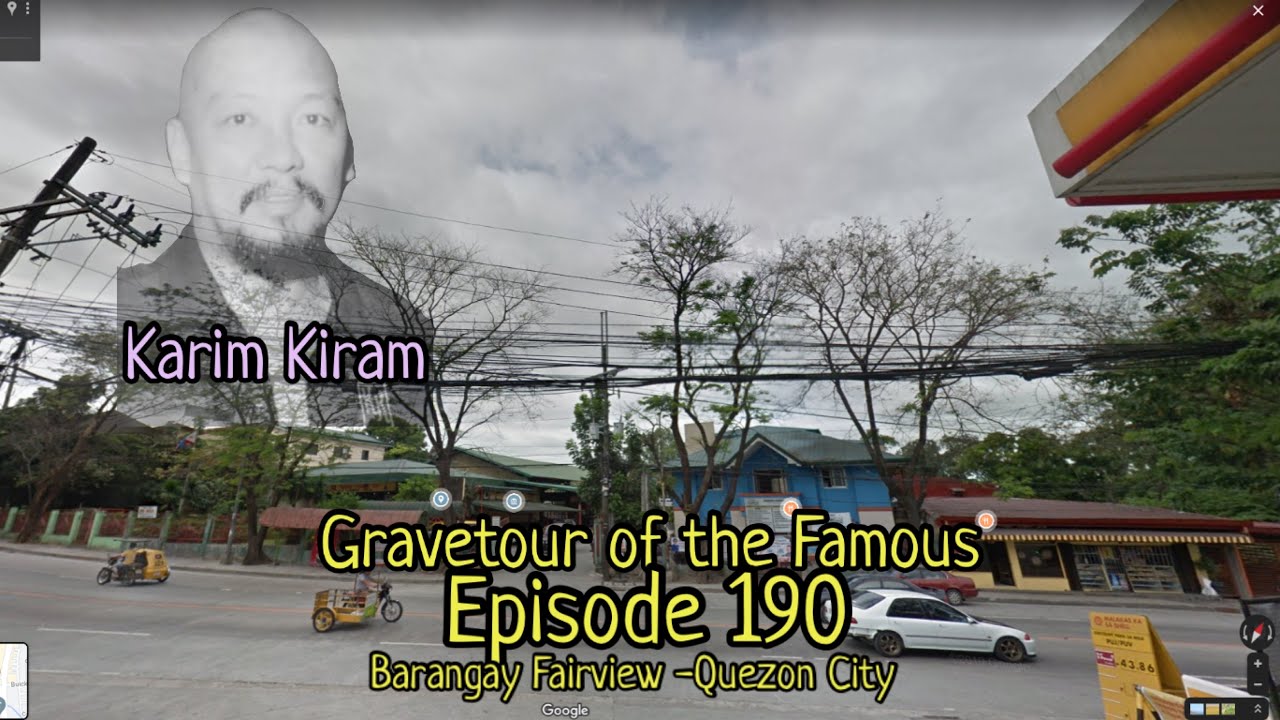
Karim Kiram


From his obituary on Tribute Archive: Bernardino C. Reyes, Jr [b. August 31, 1936], also known to Filipino moviegoers and friends in America as Karim Kiram, was called home to the Lord on March 6,2018. Born in Iligan City, Lanao (now Lanao del Norte), Mindanao, the eldest son of Col. Bernardino C. Reyes Sr. and Teodora Cabili, he studied at San Juan de Letran, University of Santo Tomas and Far Eastern University, where he got his Law diploma. His first job was with the National Waterworks Company, NAWASA, until he joined the Bureau of internal Revenue in 1969 where he helped organize its labor union. He appeared in motion pictures with the superstars of his time, among them the late Fernando Poe Jr, former President and now Mayor of Manila Joseph Estrada, Tony Ferrer and former Senator Ramon Revilla Jr. Though he acted as a villain in most of his movies, in real life, he was kind and gentle, though somewhat strict to his children, especially the boys. 

He excelled in sports, from his youth. In Bulacan, where his family moved, he was a star basketball player. He was that as well when he studied at the University of Santo Tomas. He was a great golfer, chess player and a sharp poker player. Tito tots as his nieces and nephews called him always had a lot of jokes and tricks that made everyone smile and appreciate his great humor. He was a basketball coach of the children of newsmen at the National Press Club where his team,including his 3 boys, always won the championships. He also coached in the USA for his grandchild who was 9 which always ended in memorable laughter. Karim published a newspaper in San Francisco called The Forward Times and authored a book titled "The Bells of Balinhiga". Despite his physical distance from the Philippines, he nurtured a deep love of his mother country, and was always concerned about how things were going in the Philippines. Karim had a booming voice, loved music and singing. His laughter, wit, intelligence and his passion will truly be missed. He is survived by his wife Galina ,7 children and 18 grandchildren, 1 great grandchild and 2 sisters.

Saturday, December 2, 2023

Umitsubame Jō No Kiseki (1984)

1984 - Umitsubame Jō No Kiseki/“The Miracle Of Umitsubame Joe” (Mifune Productions Co. Ltd/Shochiku-Fuji Company)

[Japanese production (海燕ジョーの奇跡,) filmed in Japan and the Philippines. Released internationally as “The Miracle Of Joe Petrel”]

Director Toshiya Fujita Screenplay Toshiya Fujita, Fumio Kônami, Eiichi Uchida Based on the novel by Ryûzô Saki Producer Toshio Nabeshima Executive Producer Kazuyoshi Okuyama Planning Producer Toshirô Mifune Associate Planner Shirô Mifune Cinematography Tatsuo Suzuki Music Ryûdô Uzaki Editor Osamu Inoue Sound Kenichi Benitani Art Director Masuteru Mochizuki Assistant Director Takao Nagaishi Production Assistant Toshio Nabeshima

Cast Saburô Tokitô (Umitsubame Joe), Miwako Fujitani (Yoko Tamagi), Kentarô Shimizu (Sawai), Midori Satsuki (Michi), Yoshio Harada (Yonamine), Toshirô Mifune (Fisherman), Izumi Hara (Grandma in Yonakuni Island), Toshiya Ito (Shimabukuro's Brother), Yoshi Katô (Kamechiyo), Taketoshi Naitô (Nagayuki Shimabukuro), Utae Shôji, Mizuho Suzuki (Writer Sawai), Kunie Tanaka (Dosegashira), Imari Tsuji (Uta, Joe's Mother) 

SYNOPSIS: Joe Petrel (Umitsubame Joe) is a half-Filipino, half-Okinawan gangster who escapes to the Philippines after killing a mob boss. The film chronicles his misadventures with underworld characters and the police.

OTHER REVIEWS on Letterboxd


VIDEO

 JAPAN - distributor unknown

DIGITAL

 JAPAN - DVD, distributor unknown


Friday, December 1, 2023

Filipino FIlms Screened in the US: Coast Cinema Theatre (1980)

FILIPINO FILMS SCREENED IN MAINLAND USA: Coast Cinema Theatre (previously the Palm Theatre), 827 Palm Ave, Imperial Beach

Proof that Tagalog films were being screened on the beach near San Diego around 1980. I can't find any newspaper listings for specific films, but the article (from the Chula Vista Star-News, 28th Cecember 1980, p.12) suggest they were exhibited over a number of years in the late 70s and into the early 80s.   


List of Filipino Films Screened in the US


LISTS OF FILIPINO FILMS SCREENED ON THE MAINLAND USA

A work-in-progress, as are the lists of Tagalog films screened in Hawaii and Guam, so please keep checking back! All locations are in California unless noted...

1947 to 1953 - Rex Theatre, San Francisco

1947 to 1953 - Globe Theatre, San Pedro

1950 to 1951 - Rio Theatre, Vallejo

1956 to 1973 - Crystal Theatre, Salinas

1970 to 1980 - Grand Theatre, San Francisco

1972 - Richelieu Cinema, San Francisco

1977 to 1979 - Paradise Twin Cinemas, National City [listings from 1977 only]

1980 - Coast Cinema Theatre, Imperial Beach [article only]

Filipino Films In The US: Paradise Twin Cinema, National City

FILIPINO FILMS IN THE US: Paradise Twin 1, National City (1977-1979)

Paradise Twin Cinema was located at 1001 Harbison Drive,National City, CA 91950, and screened Tagalog films to residents around San Diego from its refurbishment and grand re-opening in January 1977 to early 1979, when the cinema finally closed.

From the Cinema Treasures website: Abe and Esther Bokow wanted to open a family-friendly twin-screen English language cinema - something National City hadn’t had for some time - in 1972. But they decided against hitching to the meteoric rise that was the Jerry Lewis Circuit opting for the turnkey approach of International Cinema Corp, of Beverly Hills. International was a feature film distributor trying to get in the franchised exhibition space which Modular Cinema, National General, Jerry Lewis and many others were playing.

The International Cinema Corp. concept apparently was to take the Jerry Lewis Cinema model and undercut the inflated prices that National Cinema Corporation was forcing franchisees to pay for equipment and supplies. The Paradise Twin was named for its neighborhood, Paradise Village and at the confluence of it, Paradise Hills and Paradise Valley. It was situated in a nondescript shopping center next to an Alpa-Beta Grocery Store for which the - then - Alpha-Beta Shopping Center was named.

National City Mayor Kile Morgan was on hand to cut the ribbon as the theatre launched on August 16, 1973. The operators used the automated equipment to grind out five showtimes of “Poseidon Adventure” and “Hot Rock” on Paradise One and three shows of “Sound of Music” on Paradise Two.

The family-friendly policy drifted in March of 1975 when the double-feature of (X-Rated) “Country Cuzzins” and “Country Hookers” graced Paradise Two. But the theatre closed in 1976 and was offered at auction by the Small Business Administration. The theatre relaunched under the same name on February 3, 1977 but now grinding Filipino films on “Paradise One” and Hollywood fare on screen two.

The automated equipment was still there given the listed showtimes. The Filipino “Paradise One "showtimes for "Lulubog lilitaw sa ilalim ng tulay” / “Buhay Bambero” were 12:30 (LL), 2:55 (BB), 5:03 (LL), 7:28 (BB), 9:36 (LL) and an additional late screening of LL. “Paradise Two” eked out seven showtimes for Carrie/Rollerball at 12:30 ©, 2:17 ®, 3:55 ©, 5:45 ®, ,7:20 ©, 9:07 ®, and 10:54 ©. The theatre also had the films, “Dogs”, advertised as shot in nearby Chula Vista paired with “The Enforcer” early in its run.

In September of 1977 the Paradise Two featured the controversial 1976 feature film, “Snuff” prompted a successful picket by locals and saving wanton wear and tear of the film prints. Far East Cinema took over the operation in December of 1977 continuing the Filipino/Hollywood grindhouse. The projectors were deprogrammed on April 30, 1979.

The theatre was sold in a Trustee’s Sale in 1987 and would become home to at least two different houses of worship. In the 2020’s, it was still high recognizable as a former Jerry Lewis Cinema knock-off with four poster frames and its box office still visible.

LIST OF FILIPINO SCREENINGS, 1977

January 31 to February 6 - Lulubog Lilitaw Sa Ilalim Ng Tulay! + Buhay Bombero

February 7 to 13 - Tag-Ulan Sa Tag-Araw + May I Go Out

February 14 to 20 - Pinagbuklod Ng Langit + Mekeni's Gold

February 21 to 27 - Kung Fu Master + Nunal Sa Tubig 

February 28 to March 6 - Darna And The Giants + Agents Wen Matong

March 7 to 13 - The Impossible Dream + Dressed To Kill

March 14 to 20 - May Langit Ang Bawat Nilikha + Bagong Salta Sa Maynila

March 21 to 27 - Ligaya Ko'y Inagaw Mo + Maynila Sa Mga Kuko Ng Liwanag 

March 28 to April 2? - Ikaw + Si Lucio At Si Miguel

April 3? to 6? - Wonder Boy + Nasaan Ka Inay

April 7 to 12 - Ikaw + Si Lucio At Si Miguel

April 13 to 17 - Karugtang Ang Katapon + King And Queen For A Day

April 19 to 24 - Sekretaryang Walang Silya + Together Again

April 26 to May 1 - Alas 5:00 Ng Hapon Giseng Na Ang Mga Anghel + Operetang Sampay-Bakod 

May 3 to 8 - Bata Pa Si Sabel + O Pagsintang Labis

May 10 to 15 - Ah, Ewan! Basta Sa Maynila Pa Rin Ako + Hindi Nakakahiya Part II

May 17 to 22 - Huwag Kang Maglaro Ng Apoy + Tansan vs Tarzan

May 24 to 29 - Carnival Song + Crisis

June 1 to June 6 - Boss, Basta Ikaw + Sino Ang May Karapatan 

NO MORE NEWSPAPER LISTINGS AFTER THIS DATE