Friday, December 8, 2023

Japanese productions filmed in the Philippines


The BAMBOO GODS LIST of Japanese productions filmed in the Philippines, and Filipino movies shot in Japan

...and it's far from complete, so please contact us with any additions or corrections. Films marked with an * are already in digital form in the Bamboo Gods Collection.

*1944 - Ano Hatte O Utte/Dawn Of Freedom/Tear Down The Stars And Stripes (co-directed by Gerry de Leon; Japanese propaganda drama on American "atrocities" in the Philippines, using American POWs in Manila)

1944 – Tatlong Maria (co-directed by Gerry de Leon and made during the Japanese occupation)

1953 - Nenita Unit (Filipino anti-Huk propaganda drama screened in Japan)

*1953 - Now And Forever (Filipino drama partly filmed in Japan)

1957 - Turista (Filipino/Japanese co-production filmed in Japan by LVN Pictures and Daiei Motion Picture Co)

1958 - Obra Maestra (People’s Pictures' portmanteau movie filmed in Japan, Hong Kong, Macao, Singapore and the Philippines)

1959 - Fires On The Plain/Nobi (A Japanese film directed by Kon Ichikawa about the Japanese army's retreat, partly filmed in the Philippines)

1960 - Basta Pinoy (Premiere Productions' musical comedy filmed in Japan)

1961 - Tokyo Calling: Walang Ligtas (Leopoldo Salcedo spy movie filmed entirely in Japan)

1961 - Filipina actress Charito Solis stars in the Japanese production Buddha*


1962 -
Charito Solis also stars in Japanese production Nessa No Tsuki/The Princess And I (Daiei Studios)

*1963 - Gojuman-Nin No Isan/Legacy Of The 500,000 (Toho, directed by Toshiro Mifune) 

1970 - Nora Aunor and Manny de Leon shot scenes for two teenybopper musicals in Hong Kong and Japan for Tower Productions - Around Asia With Nora and The Golden Voice. The majority of scenes for the two features were filmed onboard the liner Ms President. 

*1970 -  風の慕情 /Kaze No Bojo/The Wind Of Fate (Japanese production partly filmed in Manila and Sydney)

*1972 - The Evil Within (Philippines production partly financed by 20th Century Fox and filmed in 1970 in India, Japan, Hong Kong and the Philippines)

*1972 - Winter Holiday (Sampaguita/VP Pictures' musical comedy starring Nora Aunor and Tirso Cruz III, filmed in Japan)

1972 - Cherry Blossoms (Lino Brocka drama filmed in Japan)

1974 - Fight! Dragon (one episode of the Japanese karate-themed TV series starring Yasuaki Kurata was filmed in the Philippines. The episode was later edited into a 1975 Hong Kong production Challenge Me Dragon, also released as Call Me Dragon and The Fighting Dragon)  

*1983 - Tatak Ng Yakuza (Rudy Fernandez action movie partly filmed in Japan)

*1984 - The Miracle Of Joe Petrel/Umitsubame Jō No Kiseki (co-produced by Toshiro Mifune)

1988 - Full Speed Run (Twins Japan Co. Ltd, stars Shinobu Sakagami, Seiji Matano and Natsuki Okamoto)

CHECK THE 1997 ENTRY!!! 1988 - Code Name K-9/KILL (Twins Japan Co. Ltd, stars Kimio Hara and Itsumi Osawa)

1988 – Passage To Hell (Ken Watanabe - very few details available other than a brief listing on IMDB)

1988 - Sando And The Diplomat's Daughter (Ken Watanabe's Watanabe Film Co; later distributed by Silver Star)

1988 - Lady Commandos (Ken Watanabe's Watanabe Film Co; later distributed by Silver Star)

*1989 - Above the War/Search And Destroy/The B-Team (Ken Watanabe's Watanabe Film Co)

*1989 - Harimao (Ken Watanabe's Watanabe Film Co)

*1990 [released 1993] - Manila Emmanuelle 1: Dangerous Paradise (Ken Watanabe)

*1990 [released 1993] - Manila Emmanuelle 2: Devilish Paradise (Ken Watanabe)

*1990 – Blowback 2/Blowback: Love & Death (Rodeo Films/Japan Home Video)

*1991 – 百度百科/Sani No Yuutsu/Sunny Gets Blue/Blowback/Sloppy Joe And The Heartbreak Gang (Rodeo Films/Japan Home Video)

*1991 - 爆裂! M・コネクション ザ・ファイナル・シューティング/Burst! M. Connection: The Final Shooting (V-Cinema, stars Rikako Murakami)

*1991 – 女ランボー/Onna Rambo/Lady Ramboh

1991 - Asian Beat: I Love Nippon (stars Ruby Moreno - was it filmed all or in part in the Philippines?)

*1992 - Men Who Love Filipinas (TV movie; Rodeo Films)

*1992 - Drug Connection (shot in Japan, USA and the Philippines) 

*1992 - マニラ極道戦争/Manila Gokudo Wars (V-Cinema from Toie; Japanese crime action shot entirely in the Philippines with Ken Watanabe as local producer)

1992 - Wangan Midnight (stars Ruby Moreno - was it filmed all or in part in the Philippines?)

1992 - Afureru Atsui Namida (stars Ruby Moreno - was it filmed all or in part in the Philippines?)


*1992 - 
ダーティ・ブルー 復讐の熱帯夜/Dirty Blue: Vengeful Tropical Night (Japan Home Video, dir. Kanazawa Katsuji) 

*1993 - Southern Winds (trilogy of stories from Asian directors - Mike de Leon, Japan's Shôji Kôkami, and Indonesia's Slamet Rahardjo)

1994 - Senso E Iko Yo!! Parts 1 & 2 (stars Ruby Moreno - was it filmed all or in part in the Philippines?)

1994 - Wasurerareta Kodomotachi/Scavengers: Forgotten Children (feature-length documentary on Smokey Mountain directed by Hiroshi Shinomiya)

*1994 - Wangan Midnight Final: GTR Densetsu Acts 1 & 2

1995 - きけ、わだつみの声 Last Friends/Kike Wadatsumi No Koe (Last Friends)/"Listen To The Voices Of The Sea (Last Friends)" (Japanese production partly filmed in the Philippines, produced by Bandai Visual Company and released by Toie)

*1995 - スコア/Sukoā/Score (Team Okuyama)

*1995 - 緊急呼出し エマージェンシー・コール/Kinkyû Yobidashi: Emergency Call (Filipino co-production starring Lorna Tolentino)

1995 - Nanba Kin'yû Den: Minami No Teiô - Gekijô Ban Part VI (stars Ruby Moreno - was it filmed all or in part in the Philippines?)

1997 -  ~キル~/Kill/Code Name K-9 (Japanese production filmed partly or entirely in the Philippines. Production company listed on IMDB as "Soft Garage")


*1997 – Shoot My Darlin’/Koroshiya & Usotsuki Musume

1999 - 百度百科/Satsujinsha - Uragiri No Kyoudan/The Killers From Paraiso  

*2000 - The Guys From Paradise (Takashi Miike) 

*2001 - Blades Of The Sun (G.O. Group Corporation)

*2002 – Uniba-G Story/Uniba G Monogatari (“documentary”)

2002 - God's Children (second documentary - after 1994's Scavengers: Forgotten Children - by Hiroshi Shinomiya) 

2003 - Abong: Small Home (dir. Koji Imaizumi)

*2005 - 海賊仁義/Kaizoku Jingi/"Pirate Honour" or "Pirate Chivalry" (Yakuza action shot in the Philippines, direct-to-DVD release)

2005 - Last Dance Of August 15th 

2005 - Chateau de Roses 

*2005 – Love Tomato

2005 - Yûsha No Hihô/The Cruel Stone 

2006 - Kamikaze (Toei)

2006 - Katana-Man (stars Ruby Moreno - was it filmed all or in part in the Philippines?)

2007 - Buddy 1 (Toei - is this an aka for Aibou: The Movie?)

2008 - Buddy 2 (Toei - is this an aka for Aibou: The Movie II?)

2008 - 相棒 劇場版 絶体絶命!42.195km 東京ビッグシティマラソン/Aibô: The Movie - Zettai Zetsumei! 42.195km Tôkyô Big City Marathon/AIBOU: The Movie (Toie)

*2009 – Pandemic (partly shot in Banaue and Bacolod)

2009 – Wangan Midnight: The Movie (unconfirmed)

2009 - Basura (third documentary by Hiroshi Shinomiya)

2010 - 相棒 劇場版II 警視庁占拠!特命係の一番長い夜/Aibô: Gekijô-ban II/Aibou The Movie 2/Partners: The Movie 2 (Toei) 

2013 - Death Match: Fighting Fist of Samurai Joe (Japanese production filmed in English in the Philippines)

*2014 – Fires In The Plain/Noba (Shinya Tsukamoto)

*2014 - Lupin The Third (dir. Ryuhei Kitamura; live-action manga shot partly in the Philippines)

2015 – Blanka (dir. Kohki Hasei; stars Don Gordon Bell)

2015 – Crossroads (dir. Junichi Suzuki; partly filmed in Baguio)

2015 - Mozu The Movie (Wowow/TBS Japan)

2016 - High And Low: The Red Rain (Image Field Inc)

2019 - Tears Of Malumpati (dir. Keita Meguro)

2020 - DitO (Kuruwa LLC Japan)

2023 - Kodomo No Hitomi O Mitsumete/YIELD Final Version (documentary feature)

2024 - Crosspoint (A modern Filipino-Japanese action-drama starring Carlo Aquino and Takehiro Hira)

Honey I Love You (details unconfirmed, with Hong Kong star Daniel Wu)

Bayside At Midnight (details unconfirmed)

Excel 3 (details unconfirmed; TV show, 3 episodes only)

Sharing Through The Silver Screen: Exchanging Japanese and Philippine Culture Through Cinema

Words by Mon Garilao

As the world continues to globalize, gradually removing barriers to people-to-people exchanges and trade of international goods and services, and as the digital revolution connects the whole world, the Philippine film industry saw itself growing alongside these rapid developments within its immediate environment.

We’ve seen the rise of international co-productions in the past two decades bringing the Philippines to the global arena of motion pictures. We saw the rise of Japan as a favorite film production partner and film destination for many local Filipino movies with the likes of “In the Name of Love” (2011), a film by Olivia M. Lamasan, and “Sid and Aya” (2018), directed by Irene Villamor, both mainstream films which featured Tokyo, Japan as their backdrop. Other Filipino films shot in Japan include “Between Maybes” (2019) by Jason Paul Laxamana; and “The Missing” (2020) by filmmaker Easy Ferrer with immense support from the Saga Film Commission. 

The independent cinema sector also showcased its ingenuity by presenting various stories on Filipinos in Japan in the films like “Blue Bustamante” (2013) by Miko Livelo, “Imbisibol” (2015) and Kintsugi (2020) by Lawrence Fajardo, and “Kita Kita” (2017), a film shot in Sapporo and other locations in Japan by Filipino film director Sigrid Andrea P. Bernardo, which soared to become the highest-grossing independent Filipino film in 2017. Consequently, there are several Filipino films with Japanese elements screening at the 2021 Tokyo International Film Festival such as “Gensan Punch” (2021) by filmmaker Brillante Mendoza, and “Arisaka” (2021) by cult filmmaker Mikhail Red.

Other interesting variations where we could see Japan and the Philippines’ film relations include short films such as “Encounters with Silence” (2016) which was produced during director Janus Victoria’s fellowship at the Japan Foundation Asia Center; also “Kodokushi” which is Victoria’s current feature film in development; “Come on, Irene” (2018) a Japanese production directed by Keisuke Yoshida starring Filipina actress Nats Sitoy; and “Onoda: – 10,000 Nights in the Jungle” (2021), a French, German, Belgian, Italian, and Japanese co-production about the Japanese soldier Hiroo Onoda who stayed in the Philippines islands until 1974 to fight even after World War II ended. The film opened Cannes Film Festival’s Un Certain Regard section and stars Japanese actors, Yuya Endo and Kanji Tsuda, with a cameo of award-winning Filipina actress Angeli Bayani.

Japan and the Philippines’ diplomatic relationship is now 65 years strong. However, our actual encounters with one another stem years way back. This deep history and friendship fostered by the memories of war, mutual understanding, trust, and solidarity are well-represented in the various films produced in both countries. Landmark films in the 21st century from the bemedalled “Aishite Imasu 1941: Mahal Kita” (2004) directed by Joel Lamangan to “Tanabata’s Wife” (2018) by Lito Casaje, Charlson L. Ong, and Choy Pangilinan were all representations of the two countries’ strong connections rooted deep in their consciousness.

Cultural content in the form of mass media such as films are very effective in bridging cultures between and among nations. Films, when exported in particular, are quite easier to be understood than other forms of media as language barriers are solved through the availability of subtitles and closed captioning. As moving images bring viewers to various places and allow them to experience diverse emotions within the comfort of their homes — now thanks to streaming sites like Netflix and online film festivals such as the Japanese Film Festival Online (JFF), the global audiences are able to build an affinity and familiarity with the cultures that they are being presented with.

In 2016, Japanese director Makoto Shinkai’s animated film “Your Name” (2016) became a huge hit in the Philippines and around the world. The director is known for his intelligent use of real-life locations in Tokyo as inspirations for his animations. With his films rising into popularity, it then became a pilgrimage by Japanese film lovers around the world to visit the locations showcased in his animated films and take real-life interpretations of each iconic scene.

Data from Japan National Tourism Organization (JNTO) Manila office emphasized that there was a 7.1% increase in Filipino tourists to Japan in the first half of 2019, a year before the pandemic, compared to the same months in 2018. It could be assumed that a huge part of its increase is due to the fact that Japanese tourist spots and locations were given more exposure in Filipino blockbuster films.

As global tourism took a worldwide pause due to COVID-19, Film Tourism might be a potential force that could entice people-to-people exchange and revitalize travel in the future. We’ve seen Japanese cinema flourish in this aspect with films like “Spirited Away” (2001) boosting the tourism of Taiwan’s Jiufen Old Street where the film was supposedly inspired from. However, with director Hayao Miyazaki clarifying that the film was not inspired by just one place, it was revealed that the success of an earlier Taiwanese film “A City of Sadness” (1989) reinvigorated interest in this historic destination.

Other examples of successful film tourism include Sukibayashi Jiro in Roppongi, renowned as the first sushi restaurant spot owned by sushi master Jiro Ono which rose to fame internationally due to the documentary film “Jiro Dreams of Sushi” (2011), and Jinpukaku in Tottori a French Renaissance style residence which was featured in the blockbuster film “Rurouni Kenshin” (2012). 

While there are several Filipino films about Japan that were shot in various Japanese locations, only a few Japanese film productions have utilized the Philippines as their cinematic mise-en-scène in the past two decades. To name some Japanese titles filmed in the Philippines: “Crossroads” (2015) by director Junichi Suzuki shot in Baguio with the Rice Terraces as backdrop; “Blanka” (2015), a film by Kohki Hasei which was part of the Biennale College of the Venice Film Festival; the blockbuster film “Lupin the 3rd” (2014) by Ryuhei Kitamura; “Tears of Malumpati” (2019) by director Keita Meguro; and “Abong: Small Home” (2003) by Koji Imaizumi starring National Artist for Cinema Kidlat Tahimik.

While Filipino film productions have actively engaged in shooting local films in Japan, more Japanese film productions have yet to experience and integrate the wonders of the Philippines in their moving images. There is a need to fortify film collaborations between both countries and at present, The Japan Foundation, Manila has been at the forefront of this endeavor. Through JFM’s grants, support programs, and several exciting projects, more Japanese filmmakers and film professionals are being invited to encounter and be introduced to Philippine cinema and culture.

Just recently, JFM hosted the film “Passage of Life” (2017) by award-winning filmmaker Akio Fujimoto at the Cinemalaya Independent Film Festival. This became an opportunity for the Filipino audiences and Director Fujimoto to get to know each other’s cinematic cultures. The pandemic might still hinder physical co-productions but through JFM’s initiatives, there is the confidence that we can expect more amazing collaborative Japan-Philippines films in the near future.

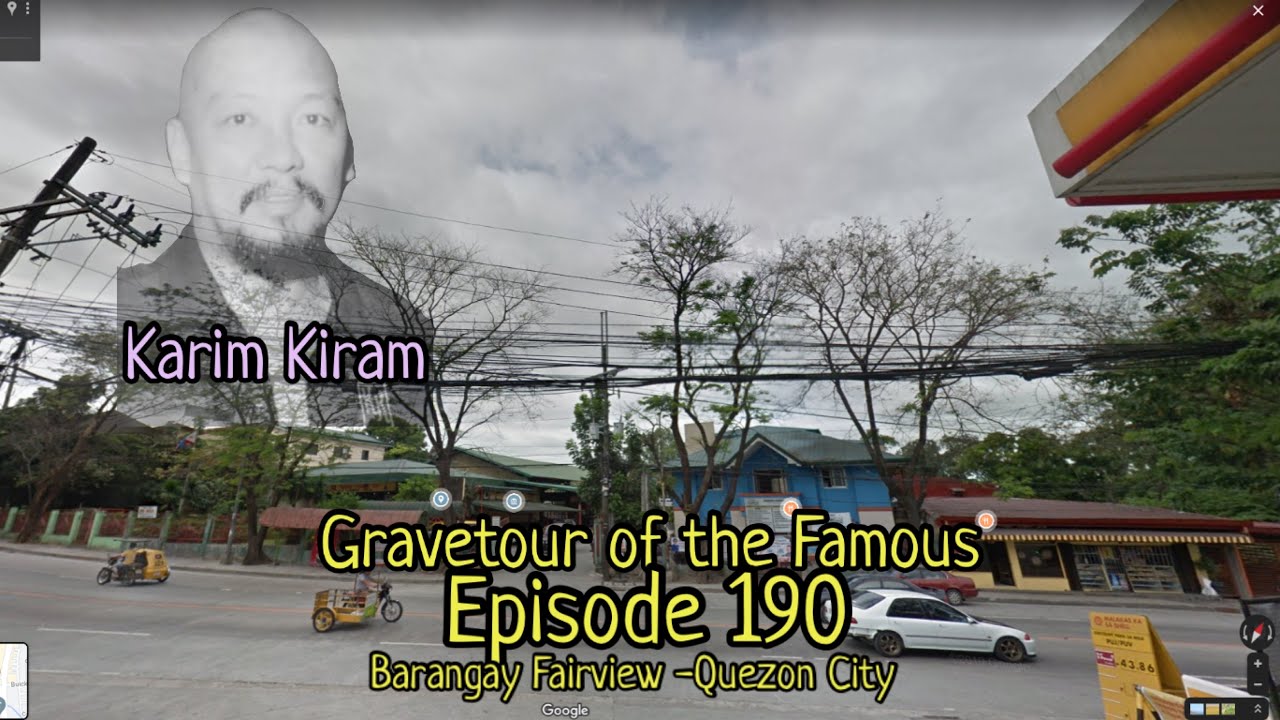
Wednesday, December 6, 2023

Karim Kiram


From his obituary on Tribute Archive: Bernardino C. Reyes, Jr [b. August 31, 1936], also known to Filipino moviegoers and friends in America as Karim Kiram, was called home to the Lord on March 6,2018. Born in Iligan City, Lanao (now Lanao del Norte), Mindanao, the eldest son of Col. Bernardino C. Reyes Sr. and Teodora Cabili, he studied at San Juan de Letran, University of Santo Tomas and Far Eastern University, where he got his Law diploma. His first job was with the National Waterworks Company, NAWASA, until he joined the Bureau of internal Revenue in 1969 where he helped organize its labor union. He appeared in motion pictures with the superstars of his time, among them the late Fernando Poe Jr, former President and now Mayor of Manila Joseph Estrada, Tony Ferrer and former Senator Ramon Revilla Jr. Though he acted as a villain in most of his movies, in real life, he was kind and gentle, though somewhat strict to his children, especially the boys. 

He excelled in sports, from his youth. In Bulacan, where his family moved, he was a star basketball player. He was that as well when he studied at the University of Santo Tomas. He was a great golfer, chess player and a sharp poker player. Tito tots as his nieces and nephews called him always had a lot of jokes and tricks that made everyone smile and appreciate his great humor. He was a basketball coach of the children of newsmen at the National Press Club where his team,including his 3 boys, always won the championships. He also coached in the USA for his grandchild who was 9 which always ended in memorable laughter. Karim published a newspaper in San Francisco called The Forward Times and authored a book titled "The Bells of Balinhiga". Despite his physical distance from the Philippines, he nurtured a deep love of his mother country, and was always concerned about how things were going in the Philippines. Karim had a booming voice, loved music and singing. His laughter, wit, intelligence and his passion will truly be missed. He is survived by his wife Galina ,7 children and 18 grandchildren, 1 great grandchild and 2 sisters.

Saturday, December 2, 2023

Umitsubame Jō No Kiseki (1984)

1984 - Umitsubame Jō No Kiseki/“The Miracle Of Umitsubame Joe” (Mifune Productions Co. Ltd/Shochiku-Fuji Company)

[Japanese production (海燕ジョーの奇跡,) filmed in Japan and the Philippines. Released internationally as “The Miracle Of Joe Petrel”]

Director Toshiya Fujita Screenplay Toshiya Fujita, Fumio Kônami, Eiichi Uchida Based on the novel by Ryûzô Saki Producer Toshio Nabeshima Executive Producer Kazuyoshi Okuyama Planning Producer Toshirô Mifune Associate Planner Shirô Mifune Cinematography Tatsuo Suzuki Music Ryûdô Uzaki Editor Osamu Inoue Sound Kenichi Benitani Art Director Masuteru Mochizuki Assistant Director Takao Nagaishi Production Assistant Toshio Nabeshima

Cast Saburô Tokitô (Umitsubame Joe), Miwako Fujitani (Yoko Tamagi), Kentarô Shimizu (Sawai), Midori Satsuki (Michi), Yoshio Harada (Yonamine), Toshirô Mifune (Fisherman), Izumi Hara (Grandma in Yonakuni Island), Toshiya Ito (Shimabukuro's Brother), Yoshi Katô (Kamechiyo), Taketoshi Naitô (Nagayuki Shimabukuro), Utae Shôji, Mizuho Suzuki (Writer Sawai), Kunie Tanaka (Dosegashira), Imari Tsuji (Uta, Joe's Mother) 

SYNOPSIS: Joe Petrel (Umitsubame Joe) is a half-Filipino, half-Okinawan gangster who escapes to the Philippines after killing a mob boss. The film chronicles his misadventures with underworld characters and the police.

OTHER REVIEWS on Letterboxd


VIDEO

 JAPAN - distributor unknown

DIGITAL

 JAPAN - DVD, distributor unknown


Friday, December 1, 2023

Filipino FIlms Screened in the US: Coast Cinema Theatre (1980)

FILIPINO FILMS SCREENED IN MAINLAND USA: Coast Cinema Theatre (previously the Palm Theatre), 827 Palm Ave, Imperial Beach

Proof that Tagalog films were being screened on the beach near San Diego around 1980. I can't find any newspaper listings for specific films, but the article (from the Chula Vista Star-News, 28th Cecember 1980, p.12) suggest they were exhibited over a number of years in the late 70s and into the early 80s.   


List of Filipino Films Screened in the US


LISTS OF FILIPINO FILMS SCREENED ON THE MAINLAND USA

A work-in-progress, as are the lists of Tagalog films screened in Hawaii and Guam, so please keep checking back! All locations are in California unless noted...

1947 to 1953 - Rex Theatre, San Francisco

1947 to 1953 - Globe Theatre, San Pedro

1950 to 1951 - Rio Theatre, Vallejo

1956 to 1973 - Crystal Theatre, Salinas

1970 to 1980 - Grand Theatre, San Francisco

1972 - Richelieu Cinema, San Francisco

1977 to 1979 - Paradise Twin Cinemas, National City [listings from 1977 only]

1980 - Coast Cinema Theatre, Imperial Beach [article only]

Filipino Films In The US: Paradise Twin Cinema, National City

FILIPINO FILMS IN THE US: Paradise Twin 1, National City (1977-1979)

Paradise Twin Cinema was located at 1001 Harbison Drive,National City, CA 91950, and screened Tagalog films to residents around San Diego from its refurbishment and grand re-opening in January 1977 to early 1979, when the cinema finally closed.

From the Cinema Treasures website: Abe and Esther Bokow wanted to open a family-friendly twin-screen English language cinema - something National City hadn’t had for some time - in 1972. But they decided against hitching to the meteoric rise that was the Jerry Lewis Circuit opting for the turnkey approach of International Cinema Corp, of Beverly Hills. International was a feature film distributor trying to get in the franchised exhibition space which Modular Cinema, National General, Jerry Lewis and many others were playing.

The International Cinema Corp. concept apparently was to take the Jerry Lewis Cinema model and undercut the inflated prices that National Cinema Corporation was forcing franchisees to pay for equipment and supplies. The Paradise Twin was named for its neighborhood, Paradise Village and at the confluence of it, Paradise Hills and Paradise Valley. It was situated in a nondescript shopping center next to an Alpa-Beta Grocery Store for which the - then - Alpha-Beta Shopping Center was named.

National City Mayor Kile Morgan was on hand to cut the ribbon as the theatre launched on August 16, 1973. The operators used the automated equipment to grind out five showtimes of “Poseidon Adventure” and “Hot Rock” on Paradise One and three shows of “Sound of Music” on Paradise Two.

The family-friendly policy drifted in March of 1975 when the double-feature of (X-Rated) “Country Cuzzins” and “Country Hookers” graced Paradise Two. But the theatre closed in 1976 and was offered at auction by the Small Business Administration. The theatre relaunched under the same name on February 3, 1977 but now grinding Filipino films on “Paradise One” and Hollywood fare on screen two.

The automated equipment was still there given the listed showtimes. The Filipino “Paradise One "showtimes for "Lulubog lilitaw sa ilalim ng tulay” / “Buhay Bambero” were 12:30 (LL), 2:55 (BB), 5:03 (LL), 7:28 (BB), 9:36 (LL) and an additional late screening of LL. “Paradise Two” eked out seven showtimes for Carrie/Rollerball at 12:30 ©, 2:17 ®, 3:55 ©, 5:45 ®, ,7:20 ©, 9:07 ®, and 10:54 ©. The theatre also had the films, “Dogs”, advertised as shot in nearby Chula Vista paired with “The Enforcer” early in its run.

In September of 1977 the Paradise Two featured the controversial 1976 feature film, “Snuff” prompted a successful picket by locals and saving wanton wear and tear of the film prints. Far East Cinema took over the operation in December of 1977 continuing the Filipino/Hollywood grindhouse. The projectors were deprogrammed on April 30, 1979.

The theatre was sold in a Trustee’s Sale in 1987 and would become home to at least two different houses of worship. In the 2020’s, it was still high recognizable as a former Jerry Lewis Cinema knock-off with four poster frames and its box office still visible.

LIST OF FILIPINO SCREENINGS, 1977

January 31 to February 6 - Lulubog Lilitaw Sa Ilalim Ng Tulay! + Buhay Bombero

February 7 to 13 - Tag-Ulan Sa Tag-Araw + May I Go Out

February 14 to 20 - Pinagbuklod Ng Langit + Mekeni's Gold

February 21 to 27 - Kung Fu Master + Nunal Sa Tubig 

February 28 to March 6 - Darna And The Giants + Agents Wen Matong

March 7 to 13 - The Impossible Dream + Dressed To Kill

March 14 to 20 - May Langit Ang Bawat Nilikha + Bagong Salta Sa Maynila

March 21 to 27 - Ligaya Ko'y Inagaw Mo + Maynila Sa Mga Kuko Ng Liwanag 

March 28 to April 2? - Ikaw + Si Lucio At Si Miguel

April 3? to 6? - Wonder Boy + Nasaan Ka Inay

April 7 to 12 - Ikaw + Si Lucio At Si Miguel

April 13 to 17 - Karugtang Ang Katapon + King And Queen For A Day

April 19 to 24 - Sekretaryang Walang Silya + Together Again

April 26 to May 1 - Alas 5:00 Ng Hapon Giseng Na Ang Mga Anghel + Operetang Sampay-Bakod 

May 3 to 8 - Bata Pa Si Sabel + O Pagsintang Labis

May 10 to 15 - Ah, Ewan! Basta Sa Maynila Pa Rin Ako + Hindi Nakakahiya Part II

May 17 to 22 - Huwag Kang Maglaro Ng Apoy + Tansan vs Tarzan

May 24 to 29 - Carnival Song + Crisis

June 1 to June 6 - Boss, Basta Ikaw + Sino Ang May Karapatan 

NO MORE NEWSPAPER LISTINGS AFTER THIS DATE


Thursday, November 30, 2023

Francisco V. Coching

Francisco V. Coching - celebrated komik author and illustrator, and often poster artist for the films adapted from his works. 

His work has been praised for its vivid characters, and dynamic portrayal of action scenes.

My photos from Makati's Ayala Museum exhibition of his works in November 2018 are HERE.

A COMPLETE LIST OF HIS FILM ADAPTIONS IS COMING SOON!

1951 – Satur (LVN Pictures)
[Release date 20th February 1951]
Director Lamberto V. Avellana Story Francisco V. Coching Screenplay Fred Daluz Executive Producer/LVN Pictures President Dna. Narcisa Vda. de Leon Music Josefino Cenizal    
Cast Manuel Conde (Satur), Jaime de la Rosa (Sendong), Delia Razon (Cristina), Alfonso Carvajal, Rosa Aguirre, Florentino Ballecer, Joseph de Cordova [as Jose de Cordova], Diana Recto, Andres Centenera, Pelagio Balmori        
HORROR/COSTUMED ADVENTURE/ROMANTIC DRAMA

1952 – Barbaro (Sampaguita Pictures)
[Release date 25th January 1952; sometimes listed as “Sabas Ang Barbarao”]
Director Eddie Romero [as Enrique Moreno] Based on the Pilipino Komiks serial by Francisco V. Coching
Cast Pancho Magalona, Tita Duran, Tessie Martinez, Bert Olivar, Tony Cayado, Jose de Villa, Chichay, Pedro Faustino, Totoy Torrente, Martin Marfil, Olive La Torre
ACTION/COSTUMED ADVENTURE

1952 - Palasig (Sampaguita Pictures)
[Release date 15th April 1952]
Director Artemio B. Tecson Story Francisco V. Coching based on his Liwayway Magazine serial
Cast Cesar Ramirez (Palasig), Gloria Romero (Florinda), Aruray, Tony Cayado, Totoy Torrente, Pedro Faustino, Dolores Crescini
COSTUMED ADVENTURE

1953 – Agilang Itim (Premiere Productions)
[Release date 10th May 1953; released in Hong Kong in 1956]
Director Teodorico C. Santos Writer Francisco V. Coching Based on his Liwayway Magazine serial Producer Cirio H. Santiago
Cast Anita Linda (Medea), Eduardo Del Mar (Namir), Fernando Royo (Lurik), Oscar Keesee (Tornak), Patria Plata (Sigrid), Elena Mayo, Maria Norma, Johnny Monteiro (Voltar), Rita Gomez, Ruben Rustia (Hassan), Tony Tolman, Edna Luna (Nadia)
COSTUMED ADVENTURE

1953 – El Indio (Sampaguita Pictures)
[Release date 20th May 1953]
Director/Screenplay Eddie Romero [as Enrique Moreno] Based on the Pilipino Komiks serial by Francisco V. Coching Music Tito Arevalo
Cast Cesar Ramirez (El Indio), Nena Cardenas, Van De Leon, Boy Alano, Tita Muñoz (Blanquita), Tony Cayado, Myrna Delgado, Bert Olivar, Martin Marfil, Totoy Torrente, Eddie Garcia, Olive La Torre, Conrado Conde, Ely Nakpil
COSTUMED ADVENTURE

1953 – Maldita (Sampaguita Pictures)
[Release date 2nd October 1953]
Director Eddie Romero [as Enrique Moreno] Screenplay Conrado Conde Based on the Pilipino Komiks serial by Francisco V. Coching Music Pastor de Jesus
Cast Pancho Magalona, Boy Alano, Rita Gomez, Tony Cayado, Bella Flores, Aruray, Martin Marfil, Aring Bautista, Panchito Alba, Ching Tello, Eddie Garcia, Jose Salameda, Citas Javellana, Dolphy [as "Dolphey Quizon"], Horacio Morelos, Conrado Conde
DRAMA

1954 - Pedro Penduko (People’s Pictures/Premiere Productions)
[Release date 21st December 1954]
Director Gerardo de Leon Story Francisco V. Coching Based on his Liwayway Magazine serial Screenplay Ding M. de Jesus Producer Cornelio Hermoso Cinematogaphy Tommy Marcelino Music Tito Arevalo Orchestration Manuel G. Franco Editor Victoriano Calub Sound Supervisor Demetrio de Santos In Charge Of Production Demetria Flores Art Director Vicente Bonus Associate Director Nestor Reyes Special Effects Santos Hilario Makeup Artists Tony Artieda, Rene Sayno Laboratory Fred Lopez Sound Willie Arce Assistant Cameraman Justo Paulino Sound Recordist Crispia Herrera Assistant Editor Armando G. Lopez Chief Artist Jose de los Reyes
Cast Efren Reyes [Sr] (Pedro Penduko), Edna Luna, Lopito, Ramon D'Salva, Ruben Rustia, Lito Anzures, Nello Nayo, Paquito Salcedo, Purita Alma, Dely Atay-Atayan [as Dely Atayatayan]. Felisa Salcedo, Venchito Galvez, Max Alvarado, Juanito Lindo, Francisco Cruz, Francisco Martin, Tony Palomer, Jose Monasterial, Bino Garcia, Benny Panganiban, Onching Balibol, Nina Morales, Renato Robles [both IMDB and Wikipedia also – incorrectly? - list Leila Morena and Vicente Liwanag]
FANTASY/ACTION/COMEDY/KOMIK ADAPTATION

1955 - Lapu-Lapu (LVN Pictures)
[Release date 15th January 1955]
Director [Lamberto V.] Avellana Story Francisco V. Coching Screenplay Donato Valentin, Jesse Ramos, Jose V. Avellana Jr Executive Producer Dña. Narcisa B. Vda. de Leon Cinematography Remegio Young Music Francisco Buencamino Jr Arranger Restie Umali Choreography Perla Garcia Supervising Editor Enrique Jarlego Editors Gregorio Carballo, Teofilo de Leon, Ananias Francisco, Leandro German Sound Director Ben P. Patajo Recordist Juanito Corpus In Charge of Production Jose P. Generoso Chief Administration Department Gumercindo Buencamino Art Director Teody Carmona Assistant Director Jose V. Avellana Jr Fencing Instructor Jesse Baltazar Makeup Artists Pacita, Corpus Loreto Reyes Wardrobe Bernardo Fernandez Assistant Camera Fortunato Bernardo Printing Honorio Calma Laboratory Atilano Corpus       
Cast Delia Razon (Miraha), Mario Montenegro (Lapu-Lapu), Priscilla Cellona (Yumi), Oscar Keesee     (Magallanes), Johnny Reyes, Ven Medina, Vic Silayan (Arturo), Jose Vergara, Eusebio Gomez, Oscar Obligacion (Enrique), Sim Pajarillo, Dan Masinas, Miguel Lopez, Zeny Garcia, Arturo "Bomber" Moran, Monang Carvajal, Mario Roldan, Ricardo Llorin, Miniong Alvarez, Jose [de] Castro, Loida Morales, Victor Aguilar, Leonardo Fernandez, Ramonroy, Emilio Valdez, Francisco Quintana, Basilio Cerdon, TNT Boys, The LVN Stuntmen       
HISTORICAL DRAMA/ACTION/BIOPIC

1956 – Gigolo (Sampaguita Pictures)
[Release date 11th October 1956]
Director Olive La Torre Story Francisco V. Coching Based on his Pilipino Komiks serial Screenplay Conrado Conde, Tommy C. David Executive Producer Mrs Jose O. Vera Cinematography Cesar Silos Music Nestor Robles Editor Jose H. Tarnate Sound Director Joseph Straight Rerecordist Nestor Tanquintic Recordists Felimon Berba, Vicente Tarnate Assistant Director Gerardo Alano Cameraman Francisco Sanchez Art Director Benjamin Resella Associate Art Director Honorato de la Paz Makeup Andy Mariano, Apolonia Francisco Coiffeurist Jessie Lopez Assistant Editor Federico Arroyo Laboratory Technician Vicente Aquende
Cast Ric Rodrigo (Virgilio Labrador), Dolphy, Barbara Perez, Paraluman, Bella Flores, Eddie Garcia, Zeny Zabala, Venchito Galvez, Herminia Carranza, Pablo Raymundo, Jaime Javier, Patty Maceda, Leleng Isla, Vic Guevarra, Nick Estacio, Pablo Guevarra, Terry Campillo, Juanito [Jun?] Aristorenas, Cecilio Chico
ROMANTIC COMEDY/MUSICAL

1957 – Pusakal/“Fugitive” (People’s Pictures)
[Release date 26th October 1957]
Director Cirio H. Santiago Writers Francisco V. Coching, Fedrico Javinal   
Cast Max Alvarado, Lauro Delgado,     Leonor Vergara, Cynthia Zamora, Zaldy Zshornack
ACTION       

1958 - Pulot Gata (Sampaguita Pictures)
[Release date 10th March 1958]
Director Jose de Villa Story Francisco V. Coching based on his komik serial
Cast Dolphy (Choy), Carlos Salazar (Primo), Barbara Perez (Nona), Tony Marzan (Gallo), Marlene Dauden (Betsy), Panchito (Don Camillo)
COMEDY

1958 – Laban Sa Lahat/“Against Everybody” (Premiere Productions)
[Release date 7th October 1958]
Director Cirio H. Santiago Based on the Uwayway serial by Francisco V. Coching Music Tony Maiquez
Cast Fernando Poe Jr, Leonor Vergara, Lauro Delgado, Oscar Roncal, Elvira Reyes, Belen Velasco, Bruno Punzalan, Jose Garcia, Francisco Cruz, Dencio Padilla, Bino Garcia, Paquito Diaz, Jess Lapid Sr [as Jesus Lapid]
ACTION

1960 – Sa Ibabaw Ng Aking Bangkay (Premiere Productions)
[Release date 20th December 1960]
Director Cirio H. Santiago Screenplay Cesar Amigo Based on the Liwayway Magazine serial by Francisco V. Coching Cinematography Felipe Sacdalan Music Tony Maiquez
Cast Ronald Remy, Aura Aurea, Carlos Padilla Jr, Quiel Segovia, Carol Varga, Rolando Liwanag, Francisco Cruz, Vic Andaya, Blackie Francisco, Dencio Padilla, Jess Lapid Sr [as Jesus Lapid], Rosa Santos
ACTION

1961 - Harangan Man Ng Sibat (Sampaguita Pictures)
[Release date 9th April 1961]
Director/Screenplay Conrado Conde Story Francisco V. Coching Based on his Espesyal Komiks serial Music Dick Zamora
Cast Paraluman, Luis Gonzales, Van de Leon, Barbara Perez, Daisy Romualdez, Tito Galla
ACTION/ADVENTURE

1961 - Vengativo (Premiere Productions)
[Release date 6th September 1961]
Director Danilo H. Santiago Story Francisco V. Coching Based on his Liwayway Magazine serial Screenplay Cesar Amigo Cinematography Tommy Marcelino Music Tony Maiquez Layouts "de los Reyes"
Cast Cesar Ramirez, Van de Leon, Myrna Delgado, Eddie Mesa, Ruben Rustia, Vicente Liwanag, Anna Marie, Paquito Diaz, Lito Anzures, Marilou Munoz, Carol Varga, Teresita Mendez, Vener Vizconde, Edward Gomez, Juliet Pardo, Lucita Soriano, Jun Rosales
ACTION/MODERN WESTERN

1962 – Thor (People’s Pictures)
[Release date 14th August 1962]
Director/Screenplay Teodorico C. Santos Story Francisco V. Coching Based on his Liwayway Magazine serial Music Josefino Cenizal Layouts Eddie Domer
Cast Mario Montenegro (Thor), Olivia Cenizal (Isolde), Bob Soler (Angor), Carlos Padilla Jr (Jamal), Lauro Delgado (Valkhan), Carlo Varga (Singred), Ruben Rustia (Mobak), Africa dela Rosa (The Queen), Jose Garcia (Blakan), Bert Olivar (The Minister), Pablo Vertuoso, Juliet Pardo, Lucita Soriano, Jun Rosales, Marvin Molina, Paquito Salcedo, Poleng Mendoza, Andres Centenera, Resty Sandel
COSTUMED ADVENTURE

1962 - Masikip Ang Daigdig/“The World Is Too Small” (People’s Pictures)
[Release date 6th October 1962]
Director Cirio H. Santiago Story Francisco V. Coching Based on his Pilipino Komiks serial Screenplay Augusto Buenaventura Music Tito Arevalo Layouts Eddie Domer
Cast Fernando Poe Jr, Aura Aurea, Mina Aragon, Lauro Delgado, Ramon D’Salva, Oscar Roncal, Eddie Fernandez, Bruno Punzalan, Jose Garcia, Rolan Montes, Francisco Cruz, Tommy Romulo, Cesar Leyson
WAR

1964 – Duwag Ang Sumuko/“Only Cowards Surrender” (People’s Pictures)
[Release date 9th April 1964]
Director Cirio H. Santiago Screenplay Teodorico C. Santos Based on the Liwayway Magazine serial by Francisco V. Coching Music Tito Arevalo
Cast Cesar Ramirez, Mario Montenegro, Leonor Vergara, Maggie de la Riva, Lauro Delgado, Ramon D’Salva, Bruno Punzalan, Paquito Salcedo, Felisa Salcedo, Johnny Long, Tommy Romulo
WAR

1964 – Mga Batikan (People’s Pictures)
[Release date 28th August 1964]
Director Danilo H. Santiago Story Francisco V. Coching Based on his Liwayway Komiks serial Screenplay Ruben Rustia Music Tito Arevalo Layouts Eddie Domer
Cast Eddie Fernandez, Carlos Salazar, Maggie de la Riva, Lito Anzures, Celia Rodriguez, Lauro Delgado, Ruben Rustia, Johnny Long, Tommy Romulo, Bando Berroya, Paquito Salcedo, Lope Policarpio, Nancy Roman
WESTERN

1965 – Mga Espada Ng Rubitanya (Sampaguita Pictures)
[Release date 19th June 1965]
Director Conrado Conde Story Larry Toledo, Joe Strait Screenplay Bert Duenas Jr Music Pastor de Jesus Layouts Francisco V. Coching
Cast Vic Vargas, Liberty Ilagan, Dindo Fernando, Jean Lopez, Bert LeRoy Jr, Blanca Gomez, Edgar Salcedo, Shirley Moreno, Sarah Calvin, Boy Alano, Rodolfo "Boy" Garcia, Elizabeth Bankhead, Nestor Rosales, Romeo Rivera, Richard Merck
ACTION/COSTUMED ADVENTURE

1966 – Pistolero (People’s Pictures)
[Release date 17th April 1966]
Director Cirio H. Santiago Writer Ruben Rustia Based on the komik serial by Francisco V. Coching Music Ariston Avelino
Cast Jess Lapid [Sr], Gina Alonzo, Nancy Roman, Juliet Pardo, Paquito Diaz, Jose Romulo, Ruben Rustia, Alex Froilan, Eddie Feist, Larry Silva, Tommy Romulo, Tony Moreno, Nick Cayari, Paquito Salcedo, Felisa Salcedo, Benny Pestano
WESTERN

1966 – Kardong Kaliwa/“Left Handed Kardo” (Larry Santiago Productions)
[Release date 12th July 1966]
Director Cirio H. Santiago Screenplay Ruben Rustia Based on the komik serial by Francisco V. Coching Music Tito Arevalo
Cast Jess Lapid [Sr], Lourdes Medel, Nancy Roman, Martin Marfil, Eddie Feist, Rocco Montalban, Jose Padilla Jr, Lito Garcia, Dindo Fernando, Mary Walter
WESTERN

1966 – Tiagong Lundag/“Jumping Tiago” (People’s Pictures)
[Release date 25th November 1966]
Director Cirio H. Santaigo Screenplay Ruben Rustia Based on the Liwayway Magazine serial by Francisco V. Coching Music Tito Arevalo
Cast Jess Lapid [Sr], Gina Alonzo, Nancy Roman, Paquito Diaz, Alex Frolan, Ruben Rustia, Mona del Cielo, Eddie Feist, Ruven D'Jesus, Tommy Romulo, Rocco Montalban, Tony Moreno, Paquito Salcedo, Benny Pestano, Nick Cayado, Sammy Sarmiento, Robert Ruez?
ACTION

1967 – Ang Limbas At Ang Lawin/ “The Falcon And The Hawk” (People’s Pictures)
[Release date 4th January 1967]
Director Cirio H. Santiago Screenplay Cesar Amigo Based on the komik serial by Francisco V. Coching Music Polding Silos
Cast Jess Lapid [Sr], Charlie Davao, Daisy Romualdez, Eva Montes, Nancy Roman, Ruben Rustia, Ramon d’Salva, Sammy Sarmiento, Roberto Rios, Paquito Salcedo, Benny Pestano, Oscar Leyson, Nick Cayari, SOS Daredevils, PMP Boys, Francisco Cruz, Dolores Pobre, Hospicio Pregonero, Larry Esguerra, Larry Silva, Johnny Long, Martin Marfil, Fred Param
ACTION/ADVENTURE

1967 – Marko Asintado/“Sharpshooter” (Regina Productions/Cirio Santiago Film Organization)
[Release date 25th January 1967]
Director/Producer Cirio H. Santiago Screenplay Ruben Rustia Based on the Pinoy Komiks serial by Francisco V. Coching Music Tito Arevalo
Cast Jess Lapid, Johnny Long, Rebecca, Fred Param, Eva Montes, Tony Moreno, Rosario del Pilar, Tommy Romulo, Paquito Diaz, Benny Pestano, Jose Romulo, Cesar Leyson, Ruben Rustia, Nick Cayari, Alex Froilan, Manolo Miranda, Larry Silva, Vic Matela
WESTERN

1967 - Sibad/“The Fast One” (Regina Productions)
[Release date 1st November 1967]
Director/Producer Teodorico C. Santos Screenplay Ruben Rustia based on the Liwayway Magazine komik serial by Francisco V. Coching Music Tito Arevalo
Cast Jess Lapid [Sr], Rocco Montalban, Divina Valencia, Paquito Salcedo, Ramon D’Salva, Nick Carayi, Ruben Rustia, Jose Garcia, Alex Froilan, Gina Lafortesa, Bruno Punzalan, Larry Silva
WESTERN

1969 – Panagupa (Larry Santiago Productions)
[Release date 6th June 1969]
Director Cirio H. Santiago Screenplay Ruben Rustia Based on the Liwayway Magazine serial by Francisco V. Coching Producer Dr Larry Santiago Music Restie Umali Layout Artist Francisco V. Coching
Cast Eddie Fernandez, Josephine Estrada, Van de Leon, Paquito Diaz, Eva Marie, Jose Garcia, Joaquin Fajardo, Steve Alcarado, Tiva Lava, Manding Rino, SOS Daredevils
WESTERN

1970 – Dimasalang/“Garden” (Junar Productions)
[Release date 12th July 1970]
Director/Producer “Junar”/Jun Aristorenas Screenplay Ding M. de Jesus Based on the Liwayway serial by Francisco V. Coching Music Virgie Gaerlan
Cast Jun Aristorenas (Dimasalang), Robin Aristorenas (Selmo), Cesar Ramirez (Don Braulio), Van de Leon (Brahman), Lauro Delgado (Gaton), Rod Navarro (Malco), Merle Fernandez (Tania), Melissa Mendez (Ella), Tintoy, Efren Montes (Lito), Lemi Esguerra (Dino), Venchito Galvez (Padre Salvo), Tony Villar, Larry Silva, Ben Dato, Steve Alcarado, Leon Pajaron, Rudy Dominguez, Romy Nario, Greg Lansang, Ernesto Rivera, Ben Bernal, Jack Montes, Jimmy Reyes, The Thunder Boys, Joe Cunanan
WESTERN

1971 – Bella Bandida (Valor Productions)
[Release date 5th May 1971]
Director/Screenplay Leody M. Diaz Based on the Liwayway Magazine komik serial by Francisco V. Coching Cinematography Jose Batac Jr Music Restie Umali
Cast Rosanna Ortiz (Bella Bandida), Tito Galla, Eddie Garcia, Gina Lafoteza, Danny Rojo, Vicky Sandoval, Larry Silva, Jaime Javier, Lope Policarpio, Rudy Gamboa, Tony Villar, Rocco Montalban, Jose Villafranca, Roderick Paulate, Ernesto Rivera, Jimmy Reyes, Ben Bernal, Pons de Guzman, Lito Frnacisco, Kent Gonzales, Bert Garon, Eddie Tagalog, Nardy Medina, Lope Villar, Eddie Castro, Feling Cudia, Thunder Boys, Max Rojo
BOMBA/ACTION

1972 – El Vibora/“The Viper” (Topaz Film Productions)
[Release date 18th June 1972; also listed as “Vibora”]
Director Ishmael Bernal Story Francisco V. Coching Based on his Liwayway magazine serial Screenplay Manuel Pichel Producer Catalino T. Dominguez Cinematography Delfin A. Carretas Music Ernani Cuenco Theme Singer Ric Manrique Lyrics Levi Celerio Editor Teofilo de Leon Sound Supervision Luis S. Reyes Soundman Demetrio “Ninoy” Carianga General Manager/Treasurer Luzviminda Dominguez Assistant Director Roger Vivero Assistant Director Soc Jose Production Manager Abelardo Toledo Production Coordinator Isagani Ricarte Fencing Instructor Mario Escudero Special Effects/Props/Costumes Totoy Torrente, Danny Torrente Makeup Artist Gene Garcia Assistant Editors Benigno de Leon, Jun Elazigue Color Laboratory Consultant Romy Fornoles Assistant Cameraman Lito Craft Laboratory Technician Peping Fornoles Printers Lito Fornoles, Severino Baladad Stills Salanga Schedule Master Dionisio Perez
Cast Vic Vargas (Geron, El Vibora), Boots Anson-Roa (Cecilia), Eddie Garcia (Alvaran), Max Alvarado (Gulimbat), Leopoldo Salcedo (Gismundo), Roderick [Paulate] (Anton), Cristina Reyes (Loretta), Andres Centenera (Padre Pantas), Leon Pajaron, Sancho Tesalona, Francisco Cruz, Raul Salvador, Richard Upton, Wendy Green (Rodelia), Pons de Guzman, Pete Pearson, Jack Munstz, Dick Nelson, Don Goines, TNT Boys
WESTERN/KOMIK ADAPTATION

1973 – Ang Mahiwagang Daigdig Ni Pedro Penduko/“The Mystical World Of Pedro Penduko” (Topaz Film Productions)
[Release date 17th June 1973]
Director/Writer Celso Ad. Castillo Based on the Liwayway Magazine serial by Francisco V. Coching Executive Producer/President Catalino T. Dominguez Jr Cinematography Loreto U. Isleta Music Ernani Cuenco Lyrics Levi Celerio Editors Nonoy Santillan, Jun Martinez Sound Engineer Demetrio de Santos Sound Effects Tony Gozalves Treasurer/General Manager Luzviminda V. Dominguez Assistant Director Jose "Boy" Aguilar Production Manager Isagani "Boy" Ricarte Production Coordinator James Dominguez In Charge Of Production Abelardo Toledo Special Effects Czar Abejuela Special Cinematographic Effects Richard Abelardo Makeup Gene Garcia Set Director Dading Urbano Propsman Joe Ganaban Assistant Cameraman Arnold Alvaro Assistant Editors Boy Santillan, Boy Calayag PRO Ross F. Celino Sales Manager Frank Ocampo Legman Aquilino Ilano Ads/Titles Designer Marvin B. Panginiban Assistant Titlists Mauro H. de la Rosa, William Panganiban Art Assistants Zech, Rrinni, Khormann, Marion Stills Fred Guevarra
Cast Ramon Zamora (Pedro Penduko), Jeanne Young, Lotis Key, Eddie Garcia, Panchito Alba, Jingle, Roberto Talabis, Vic Varrion, Mario Escudero, Belo Borja, Subas Herrero, Cris Buddha Cruz, Dolores Pobre, Dan Zaragoza, Rod Francisco, Johnny Ramirez, Edgar Garcia, Mary Martin, Juanita Rodriguez, Boy Caoile, Teody Baldomaro, Mando Mangarin, Joe Kelly, Fidel Tiongson, Conchita Felipe, Mary Rive Diaz, Adelfa Lim, Jimmy Cruz, Jess Haruta, Czar Bakal, Johnny Thor, Ben Javier, Tomas Luciano, Gregorio Intal, Dominador Manalastas, Augusto Banaag, Ronnie Dominguez Children Natalie Roxas, Andy Roxas, Teresita dela Cruz, Nemencio Dimasupil, Rene Gecana [poster also lists Tony Gozalves, Lorna Locsin]
FANTASY/ADVENTURE/MUSICAL/KUNG FU 

1984 - Ang Pagbabalik Ni Dimasalang/"The Return Of Dimasalang" (Emperor Films)
[Release date 6th August 1984; sequel to "Dimasalang" (1970), also starring Jun and Robin Aristorenas]
Director "Junar"/Jun Aristorenas Story/Screenplay Totoy Empaynado Based on the komik characters created by Francisco V. Coching Cinematography Danny Bustos Music Pablo Vergara Art Director Mario Carmona
Cast Jun Aristorenas (Dimasalang), Robin Aristorenas (Selmo), Marilou Bendigo, Janice Jurado, Rowena Ruiz, Jenny Ramirez
WESTERN